
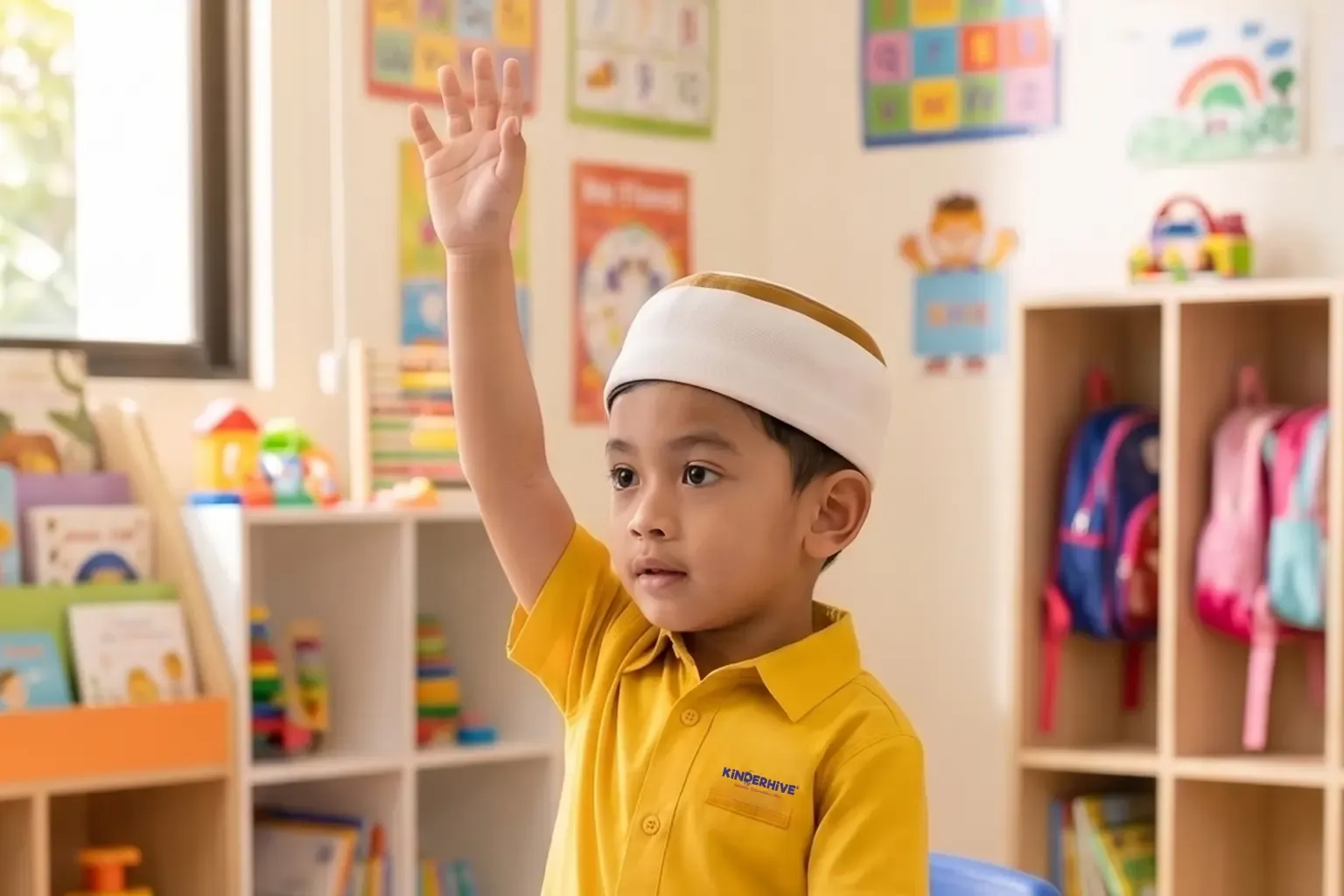
What Islamic Early Childhood Education Builds
For many Muslim parents, that goal feels deeply personal. You are not only choosing a school or program. You are shaping the environment that will influence how your child sees Allah, how they treat other people, and how they feel about learning itself. In the early years, those foundations matter more than many people realize.
What islamic early childhood education really means
Islamic early childhood education is more than adding Islamic studies to a preschool timetable. A strong program does not treat faith as a separate subject that appears for one lesson and disappears for the rest of the day. Instead, Islamic values are woven into routines, play, language, behavior, and learning experiences.
In practice, that means children are guided to develop adab alongside early literacy, curiosity alongside gratitude, and independence alongside respect. They may learn letters, numbers, and problem-solving skills while also learning to make dua, share kindly, speak truthfully, and care for the people around them.
This matters because young children do not learn in compartments. They absorb patterns. If faith is only presented as memorization, they may see Islam as something formal and distant. If faith is presented through warmth, consistency, and meaningful daily practice, they begin to experience Islam as a way of living.
Why the early years matter so much
From ages 1 to 6, children are building the foundations of identity, emotional regulation, communication, and social behavior. These are not side issues. They influence how a child enters primary school, responds to challenges, and forms relationships with teachers and peers.
In an Islamic setting, the early years are also a time to plant love before obligation. Young children are not ready for heavy instruction, but they are very ready for attachment, imitation, and routine. They notice tone of voice, fairness, gentleness, and repetition. They learn what is normal in their environment.
That is why effective Islamic early childhood programs focus less on pressure and more on formation. A child who feels safe, loved, and guided is more open to learning. A child who experiences Islamic values through calm routines and caring adults is more likely to carry those values with confidence.
The balance between faith and child development
Parents sometimes worry they have to choose between Islamic grounding and modern educational quality. In reality, the best early childhood environments do not force that choice. They recognize that children need both.
A faith-centered program should still reflect what we know about child development. Young children learn through play, movement, repetition, storytelling, sensory exploration, and relationships. They need language-rich environments, age-appropriate expectations, and teachers who understand developmental stages.
That means a quality Islamic classroom can include phonics, early math, creative arts, science exploration, and problem-solving, while still being anchored in Islamic identity. STEAM activities, guided play, and social-emotional learning are not in conflict with faith. When used thoughtfully, they support the growth of capable, curious, and grounded Muslim children.
The trade-off is not faith versus progress. The real question is whether a program knows how to integrate both with care.
What strong islamic early childhood education looks like
A strong program is visible in the small things. You can often sense it before you read the curriculum documents. The environment feels calm but alive. Teachers speak with warmth and intention. Children are engaged, not just managed. Islamic language appears naturally, not performatively.
Academically, there should be clear developmental goals. Toddlers need sensory play, early communication, and secure routines. Preschoolers need opportunities to build pre-reading, number awareness, motor skills, and confidence in group settings. Kindergarten-aged children need stronger school readiness while still learning through active, meaningful experiences.
Spiritually and morally, the program should support habit formation in age-appropriate ways. Young children can learn simple surahs, duas, and stories of the prophets, but the deeper goal is internalization through repeated practice. Saying salam, taking turns, showing kindness, tidying up responsibly, and expressing thankfulness are all part of Islamic formation.
Strong programs also respect the pace of childhood. A child does not become more Islamic by being pushed beyond their developmental readiness. Too much rigidity can create stress, resistance, or shallow performance. Children need structure, but they also need joy.
The role of teachers and learning environments
Curriculum matters, but teachers carry the curriculum into real life. In early childhood, children learn as much from a teacher's character as from the planned lesson. A teacher who models patience, fairness, cleanliness, and gentle correction is teaching Islam all day long.
That is why educator quality is one of the clearest indicators of program strength. Teachers should understand child development, classroom management, and age-based learning strategies. At the same time, they should be able to model Islamic values in a way that feels sincere and reassuring.
The learning environment matters too. Young children need spaces that invite exploration while maintaining order and safety. Books, visual materials, hands-on resources, and routine charts should support both developmental learning and Islamic identity. A classroom can feel modern, creative, and organized while still being unmistakably faith-centered.
Parents are part of the education process
No early childhood setting can carry this responsibility alone. Children develop best when the messages they receive at school are reinforced at home. That does not mean parents must replicate the full classroom experience. It means simple consistency matters.
When families use the same key phrases, encourage similar routines, and respond to behavior with shared values, children experience continuity. A school may teach a child to say alhamdulillah, but that habit becomes meaningful when it also lives at home. A program may introduce adab in group settings, but it strengthens when parents practice it during meals, playtime, and family conversations.
This is one reason many families are drawn to an education ecosystem rather than a stand-alone classroom. Support through books, digital learning tools, videos, and parent resources can help extend learning beyond school hours. For young children, repetition across settings is powerful.
What parents should look for before choosing a program
Not every Islamic program offers the same level of quality, and labels alone are not enough. Parents should look closely at how Islamic identity is practiced, how children are taught, and whether the environment supports real development.
Ask how the program approaches play, behavior guidance, school readiness, and Islamic learning. Notice whether children seem fearful or confident, passive or engaged. Look for evidence of structure, but also signs of warmth. A good setting should feel nurturing and purposeful at the same time.
It also helps to ask how different age groups are supported. The needs of a 2-year-old are very different from the needs of a 5-year-old. A thoughtful program will not treat early childhood as one broad category. It will have clear age-based goals and methods.
For families seeking long-term consistency, systems matter as well. When an education brand has strong teacher support, organized frameworks, and multi-format learning resources, parents often benefit from greater continuity and trust. That kind of ecosystem is part of what makes KinderHive's approach especially meaningful for families who want both nurturing care and structured growth.
A foundation that shapes more than school readiness
School readiness is important. Children need language, confidence, focus, and basic academic skills to transition well into their next stage of learning. But for many Muslim families, the deeper hope is larger than readiness alone.
They want children who know that learning is a gift from Allah. They want children who can express themselves kindly, approach others with respect, and carry their Muslim identity without confusion. They want faith to feel close, not abstract.
That kind of formation begins early, and it rarely happens by accident. It grows through intentional environments, caring adults, and everyday experiences that connect knowledge with character. When Islamic early childhood education is done well, it does not only prepare children for primary school. It prepares them to begin life with roots.
The early years pass quickly, but what is planted in them can last far beyond childhood. Choosing a faith-centered and developmentally sound start is one of the clearest ways to give children both belonging and direction.