
What Age Should Your Child Start Preschool?
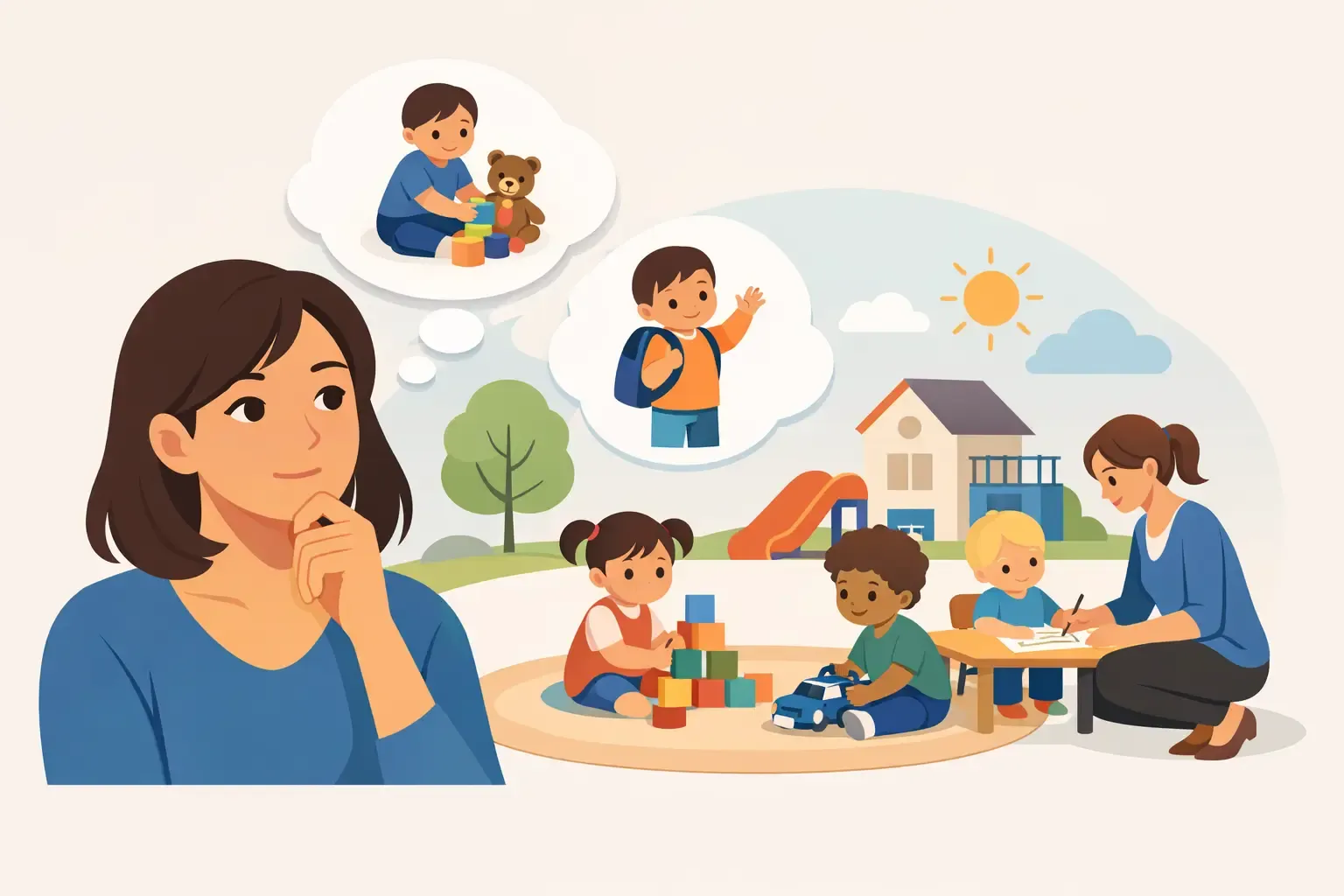
There is no single age that is right for every child. Most children begin a preschool program between ages 3 and 4, while some benefit from a gentle playschool experience from around age 1 or 2. The best timing depends less on what other families are doing and more on your child’s developmental readiness, family routine, and the quality of the program.
What Age Should a Child Start Preschool?
In the United States, preschool commonly serves children ages 3 to 5, before kindergarten. Many programs have a minimum age of 3 by a specific date and may ask that children be toilet trained. Yet these policies are admissions guidelines, not a measure of whether a child is emotionally ready.
A child who starts at 3 may enjoy the social experience, benefit from predictable routines, and grow quickly in language and independence. Another child may thrive by waiting until 4, especially if they are still adjusting to separation, have a later birthday, or need more time to develop communication skills. Starting later is not falling behind. Early childhood is not a race.
For younger children, a quality playschool setting can offer a gradual introduction to group care and learning. Short sessions, warm teachers, familiar routines, sensory play, songs, stories, and plenty of movement matter far more than formal academic work at this stage.
Readiness Matters More Than a Birthday
Age gives parents a useful starting point, but readiness gives a clearer answer. Preschool is a social and emotional experience before it is an academic one. Children do not need to be perfectly independent or never upset at drop-off. They do need support that matches where they are.
A child may be ready for preschool when they show interest in other children, can take part in a simple routine, and can communicate basic needs in a way adults can understand. They may be able to sit with a story for a few minutes, try an activity with guidance, or separate from a trusted caregiver with reassurance.
Just as meaningful are the signs that a child may need a gentler transition. A child who is highly distressed by brief separations, cannot yet manage a group setting without becoming overwhelmed, or has a major change happening at home may benefit from waiting or beginning with fewer days. A new sibling, a move, illness, or a change in caregiving can make even a normally confident child need extra time.
Readiness is not all-or-nothing. A caring preschool should help children build it. A child may cry during the first few drop-offs and still be ready. The key question is whether they can be comforted, gradually engage with the day, and begin to feel secure with consistent support.
Preschool Readiness Is Not About Reading Early
Parents sometimes worry that preschool must begin early for a child to learn letters, numbers, or writing. Those skills can develop through play, conversation, books, daily routines, and meaningful experiences at home as well as at school.
A strong preschool program focuses on the foundations beneath academics. Children learn to listen and speak, use their hands with growing control, solve simple problems, share space with others, and recover when something does not go their way. They explore early literacy and math through stories, games, building, sorting, art, and real-life questions.
This approach is especially valuable because young children learn best when they are active participants. A worksheet may show a finished answer, but play reveals how a child thinks, persists, imagines, and relates to others.
For Muslim families, early education can also support habits of the heart. A child can learn to greet others with warmth, care for shared materials, say Bismillah before beginning, express gratitude, and understand that kindness and responsibility are part of everyday life. These lessons are most powerful when they are modeled consistently, not treated as an extra subject.
Choosing Between Playschool and Preschool
The right starting point may be a gradual path rather than a full preschool schedule immediately. Playschool is often suited to toddlers and younger children who are beginning to explore learning away from home. It can offer structured play, social interaction, language-rich activities, and gentle separation practice.
Preschool is generally a better fit for children who are ready for longer group routines and more sustained learning experiences. At ages 3 and 4, children often become more interested in friendships, role-play, questions, and independent tasks. A thoughtfully designed classroom can build on this natural curiosity without expecting them to act older than they are.Consider the practical fit, too. A child who is enthusiastic but exhausted after a long day may do better with a half-day schedule. A child who is cautious in new settings may flourish with two or three consistent mornings each week before moving to more days. More hours are not automatically better. The right schedule leaves room for rest, family connection, and unhurried play.
What to Look for in a First Preschool
The classroom environment can make a greater difference than the exact starting age. Look for teachers who speak to children calmly, notice individual needs, and guide behavior with patience rather than shame. Young children need clear boundaries, but they also need adults who understand that learning self-control takes time.
Ask how the program handles separation at drop-off, toileting, naps or rest, food, conflict between children, and communication with parents. Clear answers show that the school has considered the daily details that help children feel safe.
A developmentally appropriate program should balance guided learning with open-ended play. Children need opportunities to create, build, move, ask questions, work with others, and spend time outdoors when possible. Modern learning experiences, including simple STEAM exploration, can be introduced through hands-on discovery rather than pressure to perform.
For families seeking Islamic early childhood education, ask how faith is woven into the day. The goal is not simply adding Islamic vocabulary to the schedule. It is creating an environment where adab, compassion, gratitude, cleanliness, honesty, and respect are lived through routines, teacher relationships, stories, and play. A child should feel that their identity is understood and welcomed.
Helping Your Child Begin With Confidence
Once you decide the time is right, prepare your child in small, reassuring ways. Talk about school using simple, positive language: who will be there, what they may do, and when you will return. Avoid making promises such as “you will not cry,” because feelings are normal. Instead, let them know that teachers will help them and that you will come back after school.
Practice everyday independence at home. Let your child try putting on shoes, opening a lunch container, washing hands, putting toys away, and asking for help. These small skills can make a new classroom feel more manageable.
A consistent goodbye routine is often more helpful than a long farewell. Offer a hug, use the same loving phrase each day, and leave with confidence once the teacher takes over. Children take cues from the adults they trust. If a parent appears uncertain, a child may feel that school is something to fear.
At home, make space for decompression. Some children will eagerly share every detail, while others need quiet play, a snack, or extra closeness before they can talk. Ask specific, gentle questions such as, “What did you build today?” or “Who sat near you at story time?”
Give the Decision Time and Mercy
A preschool start does not have to be permanent on day one. If a program allows it, begin gradually and observe how your child responds over several weeks. Look beyond the first difficult morning. Are they becoming more familiar with the teacher? Do they mention an activity, a friend, or a song? Are they regaining their usual energy after school?
If the fit is not right, changing the schedule, waiting a little longer, or choosing a different environment can be a wise response. Your child is not a problem to be fixed. They are an individual entrusted to your care, growing at their own pace.
The best age to start preschool is the age when your child can be welcomed into a safe, joyful community that sees more than milestones. With patient guidance, meaningful play, and values that are practiced every day, their first steps into school can become a steady beginning for both learning and character.