
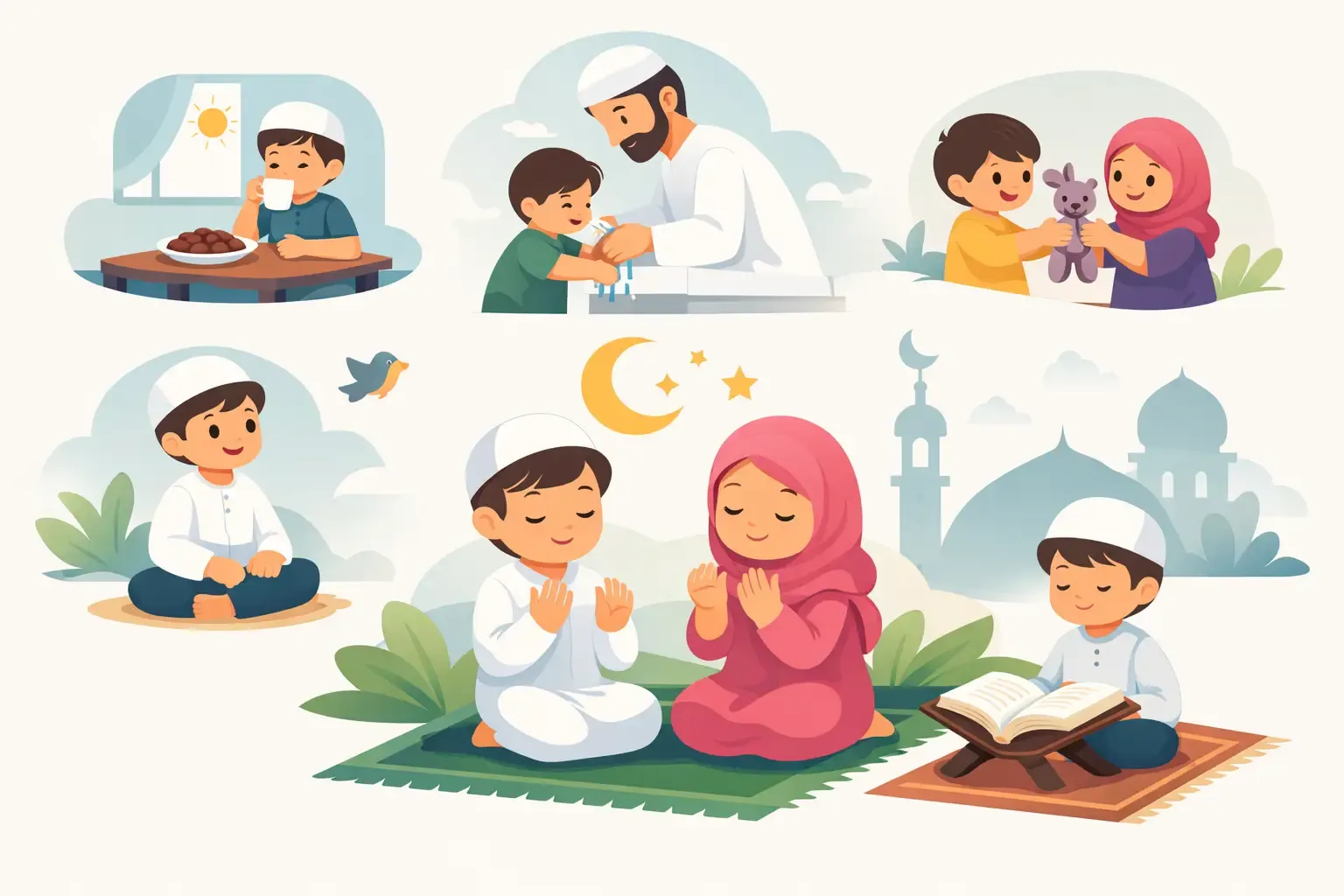
7 Sunnah Habits for Preschoolers to Practice
In the early years, children learn most deeply through imitation, play, rhythm, and relationships. A gentle routine practiced with patience can shape a child’s sense of identity far more effectively than repeated correction. The goal is not perfection. It is helping children associate the Sunnah with love for Allah, care for others, and confidence in the little things they can do each day.
Why Small Sunnah Habits Matter in the Preschool Years
Preschoolers are building the foundations of self-control, language, empathy, and independence. Islamic habits can support each of these areas when they are taught in ways that match a child’s development. Saying salam helps children practice social confidence. Waiting to eat after saying Bismillah supports patience. Cleaning up after an activity builds responsibility and respect for shared spaces.
These practices also give young children a steady connection to their Muslim identity. They begin to understand that Islam is present in ordinary family life: at the breakfast table, during playtime, in the car, before sleep, and when they meet someone new. Faith is not reserved for a special occasion. It is lived through everyday choices.
Parents should also give themselves grace. Some children enjoy routines quickly, while others need more reminders, movement, or visual cues. A three-year-old may say only part of a phrase or need help remembering which hand to use. That is still learning. Consistency and a calm adult example matter more than getting every detail right.
Start With Connection, Not Correction
Before introducing a new habit, make the moment feel positive. Get down to your child’s eye level, use a warm voice, and show them what to do. Instead of saying, “You forgot again,” try, “Let’s say Bismillah together.” Instead of focusing on a mistake at the table, offer a simple reminder: “We use our right hand. Would you like to try?”
Praise effort specifically. “You remembered to greet Grandma with salam” is more helpful than a general “Good job.” It tells children what they did well and encourages them to repeat it. A smile, high-five, or short cuddle can make the practice feel rewarding without turning worship into a performance.
Young children also learn through predictable cues. A small phrase before meals, a familiar song during cleanup, or a picture card by the bathroom sink can prompt independence. Keep the language simple and repeat it often. Over time, children begin to lead the habit themselves.
7 Sunnah Habits for Preschoolers to Practice
1. Begin With Bismillah
Teach children to say “Bismillah” before eating, beginning an activity, or leaving the house. Start with one consistent moment, such as before meals, rather than trying to use the phrase everywhere at once. When it becomes familiar, children can begin connecting Bismillah with other parts of their day.
For a child who is still learning to speak clearly, saying even the first part of the phrase is a lovely start. Model it naturally, without pressure. The aim is for children to recognize that Muslims begin their actions by remembering Allah.
2. Offer Salam With a Smile
Greeting family members, teachers, and friends with “Assalamu alaikum” teaches both faith and social connection. Preschoolers may be shy in new places, so avoid forcing them to greet every person immediately. Give them time, model the greeting yourself, and celebrate their courage when they are ready.
Role-play can make this habit fun. Use dolls, stuffed animals, or pretend visitors to practice saying salam, responding to it, making eye contact, and smiling. This transforms a social expectation into a simple, welcoming skill.
3. Practice Gentle Table Manners
Meals offer several age-appropriate Sunnah practices. Children can wash their hands, say Bismillah, sit calmly for a short time, and eat with their right hand. These are meaningful habits, but preschoolers do not need a perfect dining experience to learn them.
Focus on one or two goals at a time. A child who is still coordinating utensils or managing a busy family meal may need reminders and support. Keep mealtimes peaceful where possible. The lesson is not just proper behavior. It is gratitude, care for the body, and respect for the food Allah has provided.
4. Say Alhamdulillah in Everyday Moments
Gratitude is easiest for children to understand when it is connected to what they can see and feel. Say “Alhamdulillah” after a meal, when rain arrives, after finding a lost toy, or when everyone comes home safely. Invite your child to notice one blessing before bed: a favorite book, a kind friend, a warm blanket, or time with family.
This is not about asking children to be cheerful all the time. They can still be disappointed, tired, or upset. Gratitude gives them a gentle way to recognize goodness even while they are learning to name difficult feelings.
5. Care for Cleanliness
Cleanliness routines can become acts of responsibility when adults explain them with warmth. Encourage children to wash hands after using the bathroom and before meals, place tissues in the trash, cover coughs, and help tidy toys after play. For many preschoolers, visual steps and playful repetition work better than lengthy explanations.
Let children participate in caring for their own things. They can put shoes in a designated place, help wipe a small spill, or carry their cup to the sink. These actions build independence while reinforcing the Islamic value of cleanliness and consideration for others.
6. Use Kind and Gentle Words
The Prophet Muhammad, peace be upon him, modeled mercy, patience, and gentleness. For preschoolers, this can look like using kind words, taking turns, comforting a sad friend, and learning not to hurt others with hands or speech.
Children will still grab toys, shout, and struggle with big emotions. That is part of development, not a sign that they have failed. In those moments, name the boundary clearly: “Hands are for helping, not hurting.” Then show the repair: return the toy, check on a friend, or try a kinder phrase. Mercy becomes real when children learn how to make things right.
7. End the Day With a Calm Dua Routine
Bedtime is often one of the best moments for spiritual connection. A short dua, a recited surah children are learning, or a few quiet minutes of gratitude can help the day end with reassurance. Keep the routine brief enough for tired preschoolers to enjoy it.
Some children settle best with the same order each night: pajamas, teeth, a story, dua, and a hug. Others need movement or extra conversation before they can rest. Follow your child’s needs while keeping one small faith-centered practice consistent. The security of this rhythm can be as valuable as the words themselves.
Make Sunnah Learning Playful and Developmentally Appropriate
Preschool learning works best when children can move, touch, repeat, and pretend. A visual routine chart can show the steps before a meal. A greeting game can help children practice salam with confidence. A pretend picnic with dolls can reinforce right-hand eating and saying Bismillah. These playful approaches do not make the Sunnah less meaningful. They help young minds understand it through experiences they can remember.
Avoid introducing too many habits at once. Choose one habit for a week or two, model it consistently, and then add another when it feels natural. Some families may prioritize mealtime practices because that is when everyone is together. Others may begin with salam or bedtime duas. The best starting point depends on your family rhythm and your child’s temperament.
It also helps when children encounter the same values in more than one setting. At KinderHive, a nurturing Islamic early childhood environment can reinforce the routines children practice at home through guided play, caring teacher relationships, and age-appropriate learning experiences. When home and school use similar language around kindness, cleanliness, gratitude, and remembrance of Allah, children receive a clear and comforting message.
Let Your Child See the Sunnah in You
Children notice far more than the words adults teach. They see how we greet people, respond when plans change, treat those who serve us, and speak when we are frustrated. A parent who says Bismillah before eating, apologizes after speaking sharply, or offers salam with warmth is giving a powerful daily lesson.
There will be rushed mornings, messy meals, and bedtime routines that do not go as planned. Return gently to the habit at the next opportunity. Each small repetition tells your child that Islam is a source of guidance and comfort, carried with them one ordinary moment at a time.