
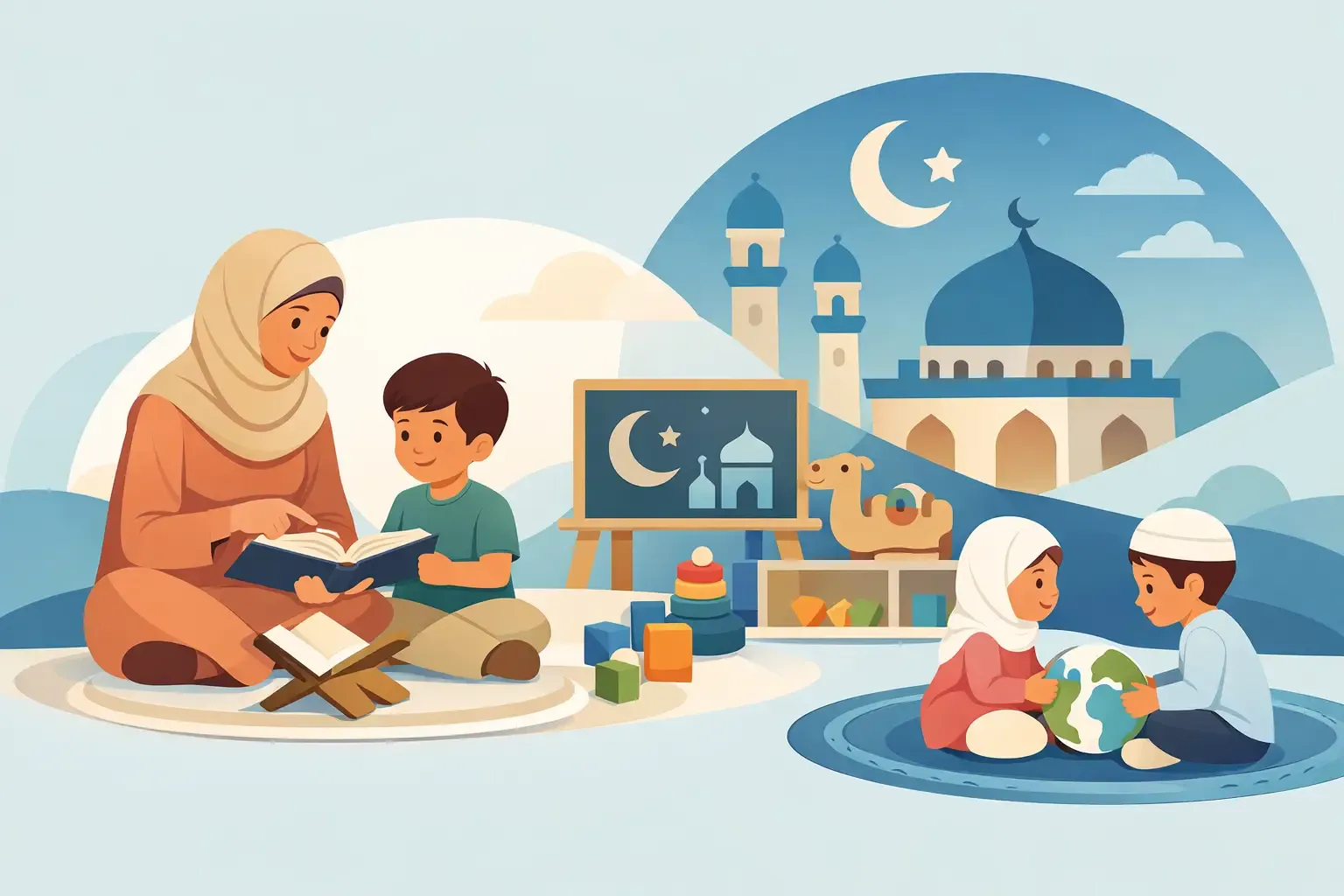
Islamic Preschool Curriculum Guide for Parents
For Muslim parents, choosing a curriculum is not simply about worksheets, alphabet recognition, or preparing for kindergarten. It is about finding an environment where a child’s Islamic identity is honored, their questions are welcomed, and their natural desire to move, play, create, and connect is understood.
What an Islamic Preschool Curriculum Should Do
A meaningful Islamic preschool curriculum brings together three areas of growth: spiritual grounding, character development, and age-appropriate learning. These areas should not compete for time. At this stage, children learn best when they are connected through familiar routines, hands-on experiences, stories, and caring relationships.
Faith learning for preschoolers should be concrete and reassuring. Young children do not need lengthy explanations of complex concepts. They need to know that Allah created them, loves goodness, hears their duas, and has filled the world with signs to notice. They can learn short surahs, simple duas, Islamic greetings, and the basic movements of salah through repetition and positive modeling.
Character formation belongs in the daily rhythm of the classroom as well. Taking turns at the water table, returning a book to its place, apologizing after hurting someone’s feelings, and sharing materials are real opportunities to practice adab. Teachers can name these moments clearly: “That was kind,” “You showed sabr while you waited,” or “Thank you for caring for Allah’s creation.”
Academic readiness still matters. A strong program supports early literacy, number sense, language development, fine and gross motor skills, creativity, and problem-solving. The difference is that these foundations are taught in ways that respect how preschool children develop: through play, conversation, repetition, exploration, and purposeful routines.
Islamic Preschool Curriculum Guide: What to Look For
Parents do not need to search for a program that teaches religion in one part of the day and academics in another. Look for a curriculum where Islamic values are naturally woven throughout the learning experience.
Faith that feels close to everyday life
The best early Islamic education is warm, consistent, and free from pressure. A child may begin the morning with salam, recite a short dua before eating, listen to a story about Prophet Nuh, and then build an ark with blocks. During outdoor play, a teacher may invite children to observe clouds, insects, and plants as part of appreciating Allah’s creation.
This approach makes faith lived rather than merely memorized. Memorization has its place, especially for short surahs and duas, but children also need a loving emotional connection to what they are learning. Ask how the school introduces Allah, the prophets, Quran, and salah. The language should build comfort, wonder, gratitude, and trust.
Play-based learning with clear purpose
Play is not a break from learning for young children. It is one of their most effective ways to learn. In a well-planned classroom, a pretend grocery store can strengthen vocabulary, counting, cooperation, and decision-making. A sensory activity can develop hand strength and descriptive language. A simple ramp experiment can introduce observation, prediction, and persistence.
Play-based does not mean unstructured or directionless. Teachers should set thoughtful learning goals, prepare engaging materials, observe each child, and extend learning with questions. The balance depends on the child’s age. A 3-year-old needs more movement, sensory exploration, and short group times than a 5-year-old who may be ready for longer projects and early literacy activities.
A place for STEAM and curiosity
Modern learning and Islamic identity belong together. Children can explore science, technology, engineering, art, and math while recognizing that curiosity is a gift. Growing seeds, designing a shelter for toy animals, mixing colors, sorting natural objects, and noticing patterns in Islamic geometric art all build early STEAM habits.
A quality curriculum does not rush children into screens or formal academics in the name of innovation. Technology, when used, should be purposeful and guided. Hands-on materials, conversation, books, outdoor discovery, and imaginative play remain essential. The goal is not to create little test-takers. It is to nurture confident learners who ask questions, try again, and see themselves as capable.
Language and literacy that honor identity
Preschool literacy should include rich conversations, read-alouds, songs, storytelling, mark-making, letter play, and opportunities to express ideas. Children benefit from hearing language that reflects their home lives and values, including Islamic vocabulary used naturally and respectfully.
For families who want Arabic exposure, consider what is realistic for the program and the child. At preschool age, Arabic may be introduced through familiar phrases, nasheeds, letters, Quranic words, and simple vocabulary. Fluency is not the only marker of success. A child’s positive relationship with the language and confidence in participating matter greatly.
Questions to Ask Before Choosing a Program
A curriculum document can sound promising, but daily practice tells the fuller story. When visiting or speaking with a preschool, ask how teachers plan for different developmental levels, how they respond to challenging behavior, and how they communicate progress with families.
You may also ask how Islamic learning appears beyond a weekly lesson, whether children have time for active outdoor play, and how teachers balance guided activities with child-led exploration. Ask what school readiness means to the program. A thoughtful answer should include social skills, emotional regulation, independence, communication, and curiosity alongside letters and numbers.
Teacher quality is central. Young children learn through relationships, so they need educators who are patient, observant, prepared, and genuinely affectionate in their interactions. Teachers should use calm guidance rather than shame, help children name big feelings, and set clear, developmentally appropriate boundaries. An Islamic setting should reflect rahmah in the way adults speak to children, especially when a child is struggling.
Safety deserves equal attention. Look for clear arrival and pickup procedures, clean learning spaces, appropriate supervision, emergency preparedness, and transparent policies. Emotional safety matters too. Children should be able to make mistakes, ask questions, and grow without fear of embarrassment.
How Learning Can Continue at Home
A preschool curriculum has greater impact when home and school reinforce one another, but parents do not need to recreate a classroom. Small, repeated moments are often more meaningful than elaborate activities. Say duas together at natural times, keep a few Islamic storybooks within reach, invite your child to help with a simple act of service, and talk about kindness after it happens.
If your child comes home excited about a topic, follow their lead. A lesson about the moon can become an evening of moon-watching. A class discussion about giving can become choosing a food item to donate. A child practicing a new dua may enjoy teaching it to a sibling or grandparent. These moments show children that Islam is not limited to one room or one hour of the day.
Consistency is more valuable than perfection. Some weeks will be busy, and some children will be more interested in trucks or painting than recitation. That is normal. Keep the atmosphere encouraging, and let learning grow through connection.
At KinderHive, this whole-child approach brings Islamic nurturing together with play-based learning, early STEAM experiences, and structured developmental support. It reflects what many families seek: a preschool experience where children are prepared for the next classroom while remaining rooted in who they are.
The right preschool curriculum gives children room to be little: to wonder aloud, spill a little paint, try again after a tower falls, and learn that kindness is part of faith. Those early experiences can become the quiet foundation from which confidence, character, and a lasting love for Allah grow.