
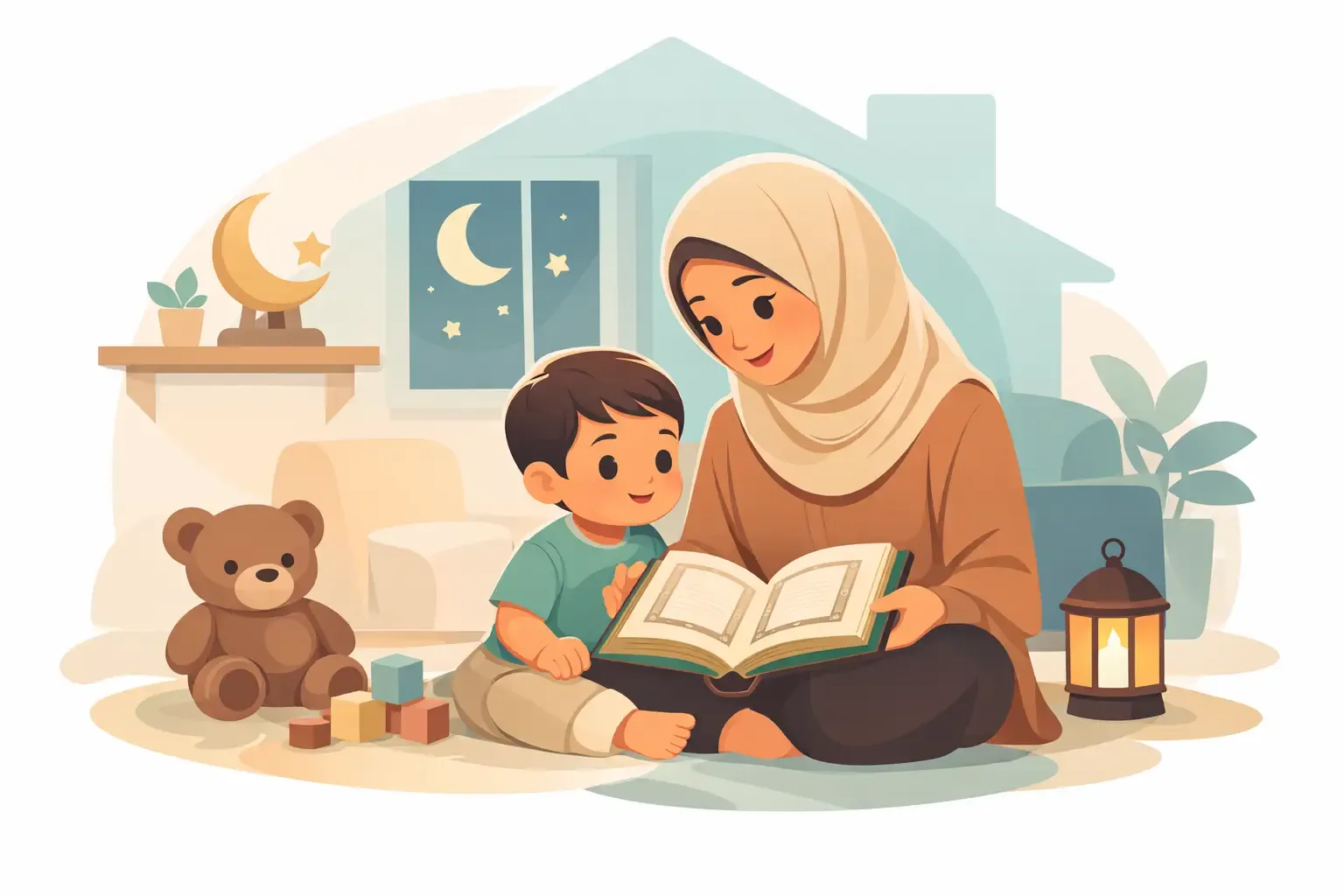
Quran Exposure for Toddlers Starts at Home
For Muslim parents, the hope is often deeply personal. We want our children to know the Quran, love it, and let its guidance shape their character. Yet toddlers are still learning to communicate, regulate big feelings, and make sense of the world through movement and play. A meaningful start respects their developmental stage while making the Quran a natural, peaceful presence at home.
What Quran Exposure for Toddlers Really Means
At ages one to three, Quran learning does not need to look like a formal lesson. Toddlers learn through repetition, imitation, sensory experiences, and secure relationships. They may sway to a recitation, repeat the end of a short ayah, point to an Arabic letter, or ask for the same surah again. These small moments matter.
Exposure means letting a child hear Quran recited beautifully and consistently, see adults treat the mushaf with respect, and experience simple Islamic routines that connect faith with everyday care. It can include listening to short surahs, saying Bismillah before eating, learning a brief dua at bedtime, or watching a parent pray with calm attention.
The goal is not to measure how many verses a toddler can recite. Some children enjoy repeating words very early, while others listen quietly for many months before joining in. Both responses can be healthy. A child’s bond with the Quran grows best when it is protected from pressure, comparison, and correction that is beyond their age.
Why a Gentle Start Has Lasting Value
Early childhood is a period of rapid brain development, but it is also a time when children form emotional associations. If Quran time feels warm, predictable, and connected to a trusted adult, a child is more likely to welcome it as they grow. If it regularly feels tense or demanding, the same child may begin to resist.
A gentle approach also supports language development. Toddlers absorb patterns of sound before they understand every meaning. Listening to Arabic recitation can strengthen their familiarity with Quranic sounds and rhythm. When parents gradually pair a short phrase with a simple explanation, children also begin to understand that the Quran carries guidance, mercy, and love for Allah.
This does not mean every moment must be perfectly quiet. Toddlers wiggle, interrupt, and change their attention quickly. A child who listens while holding a toy or walking around the room may still be taking in more than adults realize. The key is to invite attention without expecting a toddler to behave like an older student.
Build Quran Into Daily Family Rhythms
Consistency is more valuable than long sessions. A few calm minutes at the same point in the day can become a reassuring family ritual. For example, play a short, clear recitation during the morning routine, listen to a familiar surah in the car, or recite together before bedtime.
Bedtime is often especially effective because the environment is naturally quieter. After pajamas and a short cuddle, a parent might recite Al-Fatihah, Al-Ikhlas, Al-Falaq, and An-Nas in a soft voice. Even if a toddler does not repeat the words, they are learning that Quran is part of comfort, care, and the end of the day.
Mealtimes offer another natural opportunity. Say Bismillah together before eating, and praise the effort rather than demanding perfect pronunciation. A toddler who says “Bismillah” imperfectly is practicing belonging. Over time, this simple habit can help them connect Islamic words with gratitude and daily responsibility.
At KinderHive, this same principle can be reflected in an age-appropriate learning environment where Islamic values are woven into routines, stories, play, and caring relationships. Children do not need faith to be presented as separate from learning. They can encounter it through the way they greet others, care for materials, express gratitude, and listen with respect.
Choose Short Surahs and Familiar Repetition
Toddlers benefit from hearing the same short passages often. Familiarity gives them confidence. Start with surahs commonly used in family prayer, especially those that are brief and easy to revisit. Keep the recitation unhurried, and use one reciter consistently when possible so the sound becomes recognizable.
It helps to let your child choose sometimes. If they ask for a favorite surah repeatedly, welcome that interest. Repetition is not boredom for toddlers. It is one of the ways they learn that something is safe, known, and worth returning to.
Avoid turning every listening moment into a test. Instead of asking, “What comes next?” after each verse, try saying, “You know this one. We hear it before sleep.” The difference is small, but the message is powerful: Quran is a source of connection, not a task to pass.
Let Children See Reverence in Action
Toddlers learn far more from what adults consistently do than from what adults explain. When they see a parent pause to listen to Quran, handle the mushaf carefully, or recite before sleep, they notice. Your calm manner teaches reverence before they can fully understand the concept.
You can offer a child-friendly Quran book or a durable board book with simple Islamic concepts, but supervise closely and keep expectations realistic. A toddler may turn pages quickly, point to pictures, or want to carry the book around. Guide them gently toward respectful handling without making the object feel forbidden or frightening.
Simple phrases can support this learning: “These are special words from Allah,” or “We listen quietly for a little while because this is Quran.” Keep explanations short and positive. At this age, a warm tone communicates as much as the words themselves.
Add Meaning Through Everyday Character
Quran exposure becomes more meaningful when children experience its values in the people around them. A toddler may not yet understand an ayah about kindness, but they understand a parent who speaks gently after a spill, an educator who encourages sharing, and a family that gives thanks for food.
Use everyday moments to connect a value with simple language. When your child helps put toys away, say, “Allah loves when we care for what we have.” When they comfort a sibling, say, “That was kind. Kindness makes Allah happy.” These are not formal tafsir lessons. They are small bridges between faith, character, and action.
Stories can help as well. Tell brief, age-appropriate stories of the prophets with a clear message a toddler can hold onto: Prophet Nuh trusted Allah, Prophet Ibrahim loved Allah, and Prophet Muhammad, peace be upon him, was gentle with children. Keep the story short enough for their attention span, then return to it another day.
Know When to Pause and Reset
Even a well-loved routine can become difficult when a toddler is hungry, tired, overstimulated, or seeking connection in a different way. If your child becomes upset during Quran time, do not force the moment. Pause, offer comfort, and try again later with a shorter recitation or a quieter setting.
It also helps to separate developmental concerns from unrealistic expectations. A toddler who does not repeat Arabic words is not necessarily falling behind. They may be listening, processing, or simply more engaged by movement than speech. If you have concerns about broader communication or hearing development, speak with your child’s pediatrician or a qualified early childhood professional. Quran learning should remain a source of reassurance, not added worry.
Families differ in their schedules, language backgrounds, and comfort with recitation. Some parents recite confidently, while others prefer to listen alongside their child as they continue learning themselves. Both can create a meaningful environment. Children benefit most from sincerity and consistency, not from a parent trying to appear perfect.
Let Love Lead the First Lessons
The toddler years are not a race toward memorization. They are an invitation to lay down a foundation of love, familiarity, and respect that can grow through preschool, school years, and beyond. A few verses heard often, a dua shared before sleep, and the memory of a parent’s peaceful voice can stay with a child in ways that no worksheet can measure.
Begin where your family is. Keep the Quran close, make room for it in ordinary moments, and let your child see that these words are part of a life lived with gratitude and trust in Allah.