
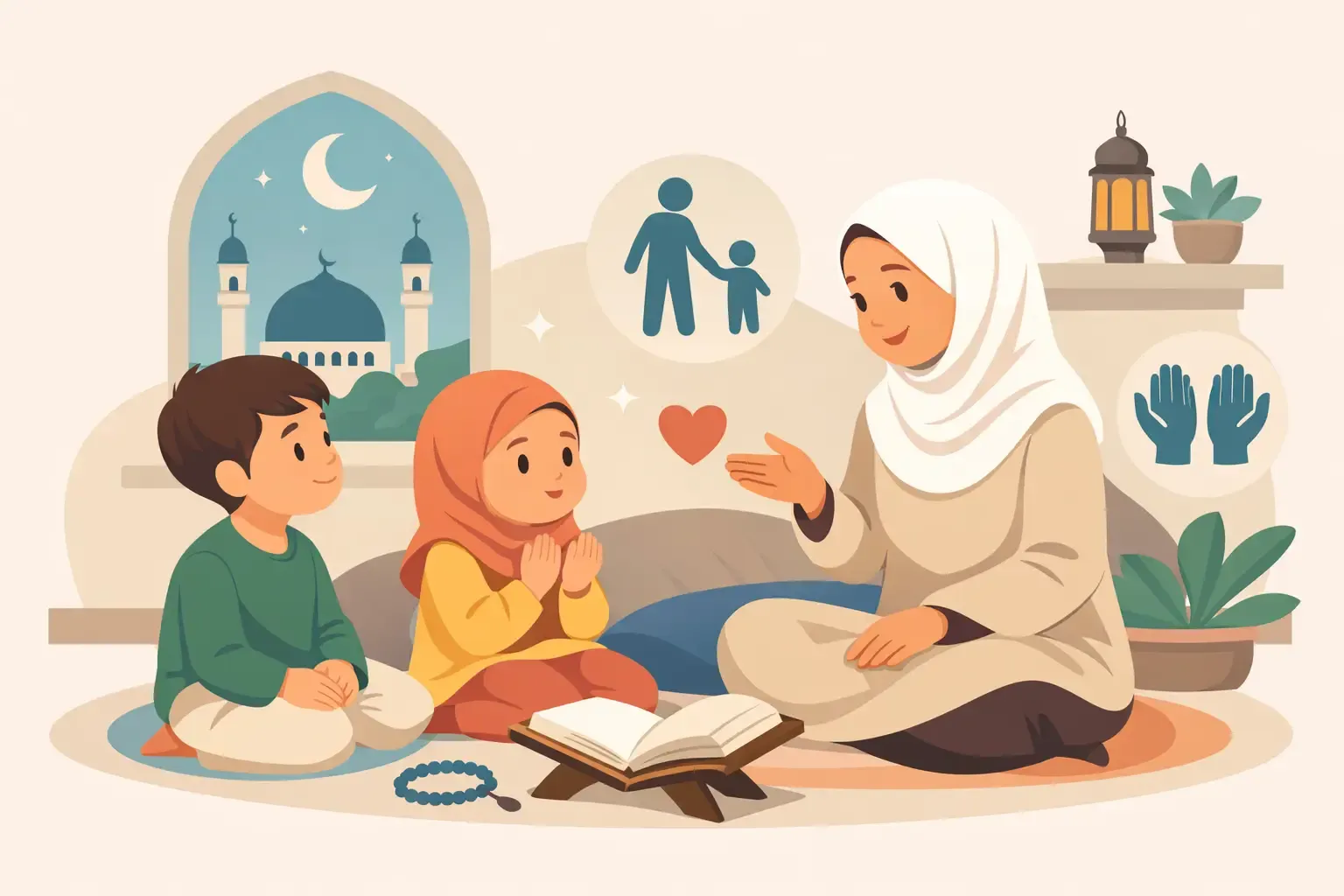
How to Teach Islamic Manners to Young Children
Young children learn through imitation, routine, movement, and warm connection. Islamic manners therefore do not need to feel like an extra subject added to an already full day. They can become part of getting dressed, sharing meals, entering a room, handling disappointment, and preparing for sleep.
Start With the Meaning of Adab
Islamic manners are often taught as a collection of phrases: say Bismillah, greet with salaam, thank people, and ask forgiveness. These phrases matter, but children also need to experience the values behind them. Adab includes gentleness, honesty, patience, cleanliness, gratitude, respect for parents and teachers, care for neighbors, and compassion toward animals and the environment.
For a preschooler, abstract explanations can be difficult to hold onto. Keep the meaning concrete. Instead of only saying, “Be respectful,” try, “We listen when someone is speaking because their words matter.” Rather than, “Have sabr,” say, “You wanted the blue cup. It is hard to wait. Let’s take a breath and wait for our turn.”
This approach connects Islamic language to a child’s real experience. Over time, a child begins to understand that good manners are not only about following rules when adults are watching. They are part of being a Muslim who brings goodness into the world.
How to Teach Islamic Manners Through Daily Routines
Consistency matters more than covering many lessons at once. Choose a few manners that naturally fit your family’s day, practice them often, and add new ones gradually. A child who is secure with a small set of habits is more likely to use them sincerely.
Make greetings a family ritual
Teach children to say Assalamu alaikum when they enter the home, greet family members, or meet someone new. At first, they may whisper, smile, or need a gentle prompt. That is normal. Respond warmly when they try: “Wa alaikum assalam. I loved hearing your salaam.”
Avoid turning greetings into a test in front of guests. Some children are naturally shy, especially in unfamiliar settings. You can model the greeting yourself and give them time to join. Manners grow best when a child feels safe, not embarrassed.
Bring remembrance to meals and transitions
Meals offer repeated opportunities for simple Islamic etiquette. Invite your child to wash hands, say Bismillah, sit calmly when developmentally able, use the right hand, and say Alhamdulillah when finished. The goal is progress, not perfection. A two-year-old will still spill, wiggle, and forget. Gentle repetition is more effective than correction at every turn.
Use similar anchors at other transitions. Say Bismillah before getting into the car, beginning a task, or opening a book. Say Alhamdulillah when noticing something joyful, such as rain, a favorite fruit, or time with family. These words help children recognize Allah’s blessings in daily life.
Practice respect in the way children speak
Help children replace demanding language with respectful requests. “Give me juice” can become “May I have juice, please?” “Move!” can become “Excuse me.” When they need help, encourage “Can you help me?” When they make a mistake, teach “I’m sorry.”
Do not expect flawless self-control in the early years. A hungry, tired, or overwhelmed child may shout before they can remember the right words. In that moment, first help them regulate. Get down to their level, speak calmly, and offer the words they can use: “You are upset. Try saying, ‘I need help.’” This teaches both emotional awareness and respectful communication.
Model the Manners You Want Them to Carry
Children notice how adults behave when plans change, when someone makes a mistake, and when no one seems to be watching. They learn patience from seeing a parent pause before reacting. They learn gratitude from hearing “Alhamdulillah” in ease and difficulty. They learn respect from the way adults speak about relatives, teachers, service workers, and one another.
This can feel demanding, because parents are human and stressful days are real. When you lose patience, repair the moment openly. “I spoke too loudly. I am sorry. I will try again more gently.” A child learns something powerful from this: Islamic manners include taking responsibility and seeking forgiveness.
Make your own Islamic practices visible in age-appropriate ways. Let children see you greet others warmly, return something that does not belong to you, make du’a for a person who is unwell, or thank Allah after receiving good news. Your example gives life to the words you ask them to say.
Use Play, Stories, and Repetition
For children ages one through six, play is serious learning. A short role-play can teach manners more effectively than repeated instructions. Set up a pretend home, store, classroom, or mosque. Take turns practicing how to enter, greet someone, ask to borrow an item, share a toy, or respond when a friend is sad.
Stories also give children memorable examples of character. Choose age-appropriate stories from the life of Prophet Muhammad, peace be upon him, and other Islamic role models that highlight mercy, honesty, generosity, and patience. Afterward, ask a simple question: “What was kind about that choice?” or “What could we do like that today?” Keep the discussion short and connected to their world.
Songs, visual cues, and repeated phrases can support emerging learners as well. A picture near the sink can remind a child to wash hands. A small family routine before meals can make Bismillah easier to remember. At KinderHive, this type of play-based, values-centered learning helps children experience Islamic identity through purposeful everyday practice rather than memorization alone.
Correct With Dignity, Not Shame
Children will interrupt, grab, refuse to share, use unkind words, and forget what they have been taught. These moments are not proof that the teaching has failed. They are the practice ground where teaching becomes meaningful.
Correct the behavior clearly, then show the next step. “We do not hit. Hitting hurts. Your hands can be gentle. Let’s check if your friend is okay.” If a child grabs a toy, guide them to return it and practice asking. If they speak rudely, help them try the sentence again with respectful words.
Public correction may sometimes be necessary for safety, but avoid labels such as “rude,” “bad,” or “naughty.” Labels can become part of a child’s identity. Focus instead on the action: “That choice was not kind,” or “We need to speak with respect.” A child should leave correction knowing both the boundary and the path back to connection.
Praise should be specific, too. Instead of a general “Good job,” say, “You waited while your sister finished speaking. That was respectful,” or “You shared your crayons when your friend needed them. That was generous.” Specific feedback helps children understand what they did well and why it matters.
Set Expectations That Match Their Age
A one-year-old is beginning to imitate gestures and words. Focus on simple routines, such as waving hello, offering a toy, or hearing Bismillah before eating. A two- or three-year-old can begin practicing greetings, short du’as, taking turns, and using polite requests with adult support.
By ages four to six, many children can understand simple reasons for manners, remember a few routines independently, help younger siblings, and reflect on how their actions affect others. They will still need reminders. Development is not a straight line, especially when children are tired, excited, or adjusting to a new environment.
It also depends on temperament. A confident child may greet everyone enthusiastically but struggle to wait. A quiet child may show deep kindness while finding verbal greetings difficult. Look for growth in the child in front of you rather than comparing them with others.
Keep Home and School Messages Connected
Children thrive when the adults around them use similar language and expectations. Ask teachers which manners your child is practicing in class, then reinforce one or two at home. Share what works for your family as well, especially if your child responds well to visual reminders, role-play, or a quiet reset before trying again.
The aim is not to raise children who perform perfect manners for praise. It is to nurture children who know that kindness, respect, and remembrance of Allah belong in their everyday choices. Each salaam, sincere apology, patient wait, and grateful word is a small seed. With steady care, those seeds can grow into character that serves them, their families, and their communities for years to come.