
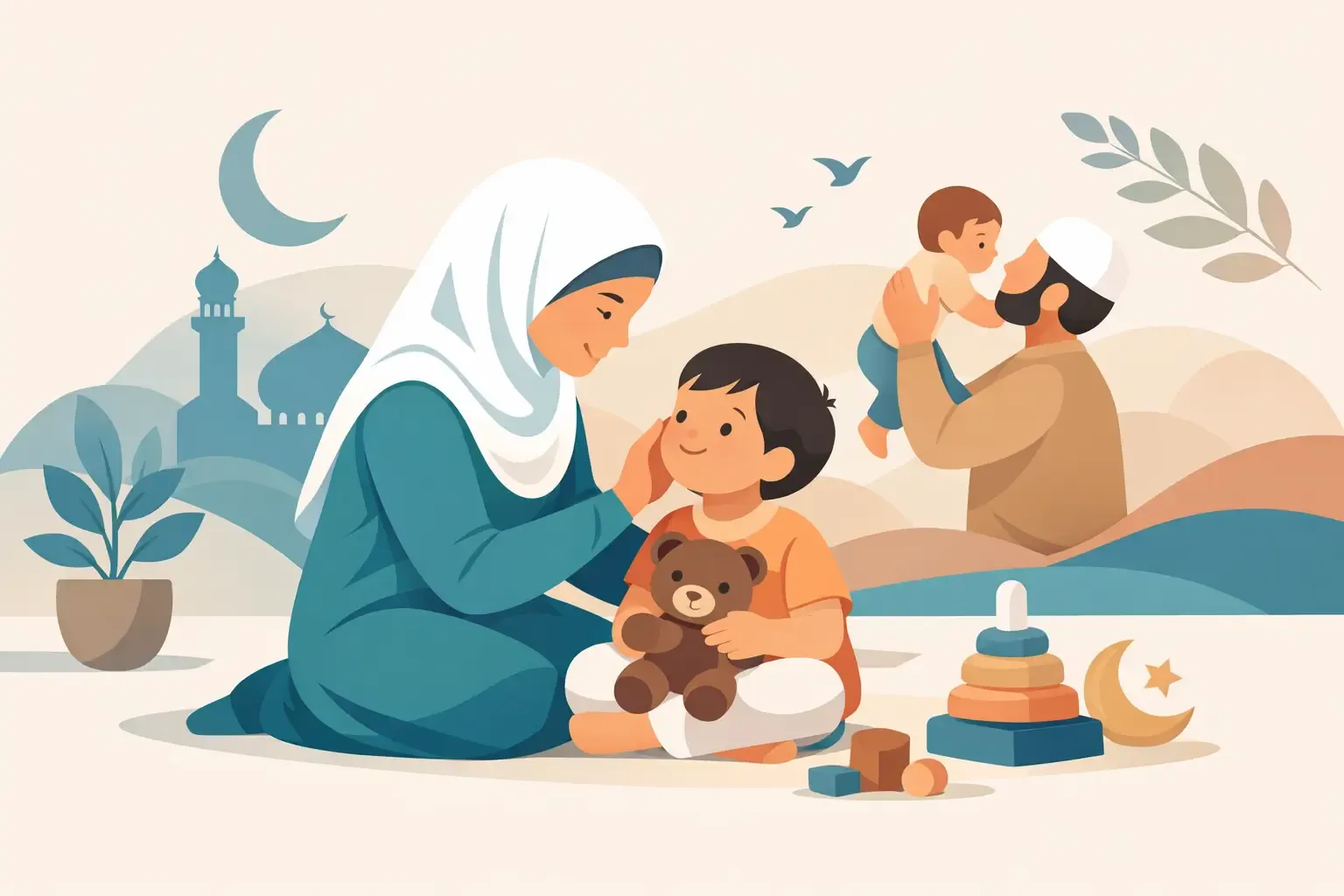
Child Development in Islam Starts With Care
For Muslim parents, early education is not simply preparation for school. It is a foundation for a life of faith, confidence, curiosity, and kindness. When Islamic values and sound child development practices grow together, children can feel secure in who they are while gaining the skills to engage with the world around them.
Child Development in Islam Is Holistic
Islam views every child as having inherent dignity and potential. A young child is not expected to behave like a miniature adult, nor should learning be reduced to memorization alone. The early years are a period of rapid language growth, emotional development, movement, imagination, and relationship-building. These areas are closely connected.
A child who feels safe is more ready to explore. A child who is listened to is more likely to develop language and self-expression. A child who practices waiting, sharing, and asking forgiveness is building social-emotional skills as well as adab. In this way, faith-centered nurturing and developmental learning support one another.
The Islamic concept of fitrah offers a meaningful starting point. Children arrive with a natural disposition toward goodness and a need for loving guidance. Parents and educators help protect and nurture that disposition through mercy, consistency, meaningful boundaries, and an environment where Allah is remembered with warmth rather than fear.
This does not mean every child develops at the same pace. Some children speak early and need help with emotional regulation. Others may be quiet observers who flourish through movement, art, or hands-on discovery. Respecting individual development is part of responding to each child with wisdom and compassion.
The Early Years Build More Than Academic Skills
Many parents understandably think about letters, numbers, and school readiness. These skills matter, but they are strongest when built on a broader foundation. Before a child can concentrate in a group activity, they need growing self-control. Before they can confidently share an idea, they need language and a sense that their voice is valued.
In a thoughtful Islamic early childhood setting, children can learn early literacy and numeracy through stories, songs, conversation, and play. They can investigate simple science concepts, build with blocks, sort natural materials, and create art. These experiences develop problem-solving, fine motor skills, communication, and creativity.
Faith can be woven naturally into these moments. A nature walk may invite children to notice Allah’s creation. A group project can become an opportunity to practice cooperation. Caring for classroom materials can reinforce responsibility and gratitude. The goal is not to turn every activity into a lecture. It is to help children see that Islamic values belong in everyday life.
Play Is Purposeful Learning
Play is sometimes mistaken for a break from learning. For young children, it is often how learning happens best. During pretend play, children practice language, empathy, and social roles. While pouring water, rolling dough, or connecting building pieces, they strengthen coordination and learn cause and effect. When a tower falls, they have a chance to persist, rethink, and try again.
Play-based learning does not mean leaving children without guidance. Adults create inviting spaces, choose age-appropriate materials, observe carefully, and extend learning with gentle questions. “What do you think will happen next?” can develop deeper thinking than immediately supplying an answer.
A balanced program may include structured routines alongside open-ended exploration. Young children benefit from knowing what comes next, especially during transitions, while still having room to make choices. The right balance depends on the child’s age, temperament, and needs.
Character Is Taught Through Daily Relationships
Children learn character by watching the adults closest to them. Saying “Bismillah” before beginning a task, returning an item to its place, speaking gently when frustrated, and apologizing after a mistake all make values visible. Repetition is especially powerful in the early years because children learn through routine.
Rather than relying only on correction, adults can name the positive behavior they want to nurture. “You waited for your turn. That was patient.” “You helped your friend feel better. That was kind.” Specific encouragement helps children connect actions with values.
At the same time, children need clear limits. Nurturing does not mean permissive. A child may be upset when a limit is set, and that feeling can be met with empathy while the boundary remains firm. “I know you want another turn. Hitting is not safe. We can use words and wait.” This approach teaches emotional regulation, accountability, and respect without humiliating the child.
Islamic character formation also benefits from realistic expectations. Toddlers are still learning to control impulses. Preschoolers may understand a rule one day and struggle with it the next. Guidance should be steady, calm, and suited to the child’s stage of development.
Family Routines Give Faith a Living Place
A child does not need a long formal lesson to begin forming an Islamic identity. Small, repeated moments at home can become deeply meaningful. A bedtime dua, a simple story about a prophet, a family habit of saying alhamdulillah, or helping prepare food for a neighbor can make faith felt and remembered.
The most effective routines are usually manageable. A family with a new baby, demanding work schedules, or a child with additional needs may need shorter and simpler practices. Consistency matters more than perfection. Even one calm, connected moment each day can strengthen a child’s sense of belonging.
Parents can also make room for questions. When a child asks about Allah, salah, Ramadan, or the world around them, a gentle and age-appropriate response shows that curiosity is welcome. If an answer is complex, it is okay to say, “That is a thoughtful question. Let’s learn more about it together.”
Screens deserve thoughtful boundaries as well. Educational videos and digital tools can support learning when chosen carefully and used with adult conversation. They should not replace active play, sleep, face-to-face connection, outdoor movement, or shared reading. For young children, relationships remain the most powerful learning environment.
What Parents Should Look for in an Early Learning Program
Choosing a preschool or kindergarten can feel like a major decision because it is one. A strong program should offer more than a polished classroom or a long list of activities. Parents should look for educators who understand child development, respond warmly to children, and guide behavior with consistency and respect.
The learning environment should be safe, organized, and rich with opportunities for children to move, talk, create, investigate, and play. Islamic teaching should feel integrated into the culture of the classroom through adab, routines, language, stories, and relationships, not limited to occasional themed activities.
Communication between educators and families matters too. When teachers share observations and parents share what is happening at home, children receive more consistent support. This partnership is especially valuable when a child is adjusting to school, experiencing big emotions, or showing a developmental concern. Early support and professional guidance can make a meaningful difference, and asking for help is a caring step.
At KinderHive, this balance is reflected in a learning approach that brings together Islamic values, character formation, play-based experiences, and modern learning opportunities such as STEAM. The purpose is not to rush childhood, but to give it the structure, joy, and spiritual grounding it deserves.
Raising Children With Confidence and Compassion
Parents do not need to create a perfect home or deliver perfect lessons to support healthy growth. Children benefit most from being seen, guided, and loved consistently. They need adults who celebrate effort, repair relationships after difficult moments, and make faith a source of comfort and direction.
Start with one ordinary moment today. Listen fully to your child’s story, invite them to help with a small responsibility, notice an act of kindness, or share a short dua before sleep. These simple acts can quietly shape a child who knows they are loved, capable, and always connected to Allah.