
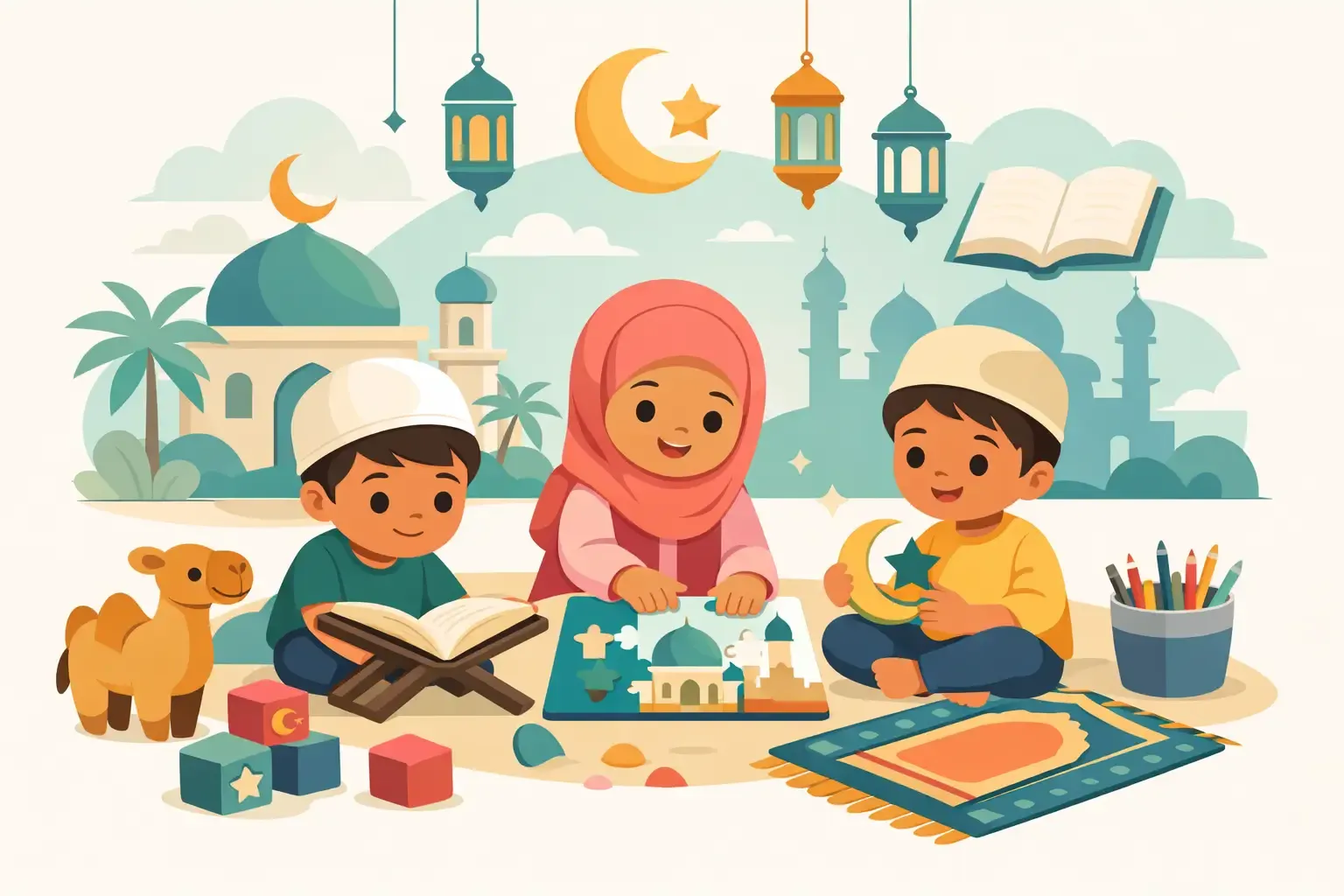
12 Best Islamic Preschool Activities for Little Learners
For young children, Islamic learning works best when it feels lived rather than lectured. A three-year-old does not need a long explanation of a value. They need to practice waiting for a turn, helping a friend, noticing the beauty of creation, and hearing warm, consistent language that gives those moments meaning.
What Makes an Islamic Activity Meaningful?
A strong activity supports the whole child. It should invite children to use their hands, bodies, imagination, language, and growing social skills while introducing Islamic identity with love. The goal is not to fill every minute with formal instruction. It is to help children experience faith as a familiar, happy part of daily life.
Keep activities short and flexible. Toddlers may engage for only a few minutes, while older preschoolers can stay with a project longer, especially when they have choices. Repetition also matters. A child may need to hear a nasheed, practice a dua, or revisit a story many times before it becomes part of their own language.
Use accurate, simple wording. Rather than asking children to memorize ideas they cannot yet understand, connect faith to what they can see and do: “Allah made the rain,” “We share because we are kind,” or “Let’s say Alhamdulillah for our food.”
12 Best Islamic Preschool Activities to Try
1. Bismillah Snack Routine
Before snack time, invite children to wash their hands, sit together, and say Bismillah. Give them small classroom jobs, such as passing napkins or helping clean the table afterward. This activity builds independence, hygiene habits, gratitude, and respect for food without making the moment feel formal.
At home, parents can use the same routine with one simple question: “What food are you thankful for today?” Keep the answer open. A child may say grapes, pancakes, or water. The point is their growing awareness.
2. Nature Treasure Baskets
Take children outdoors to collect safe natural items such as fallen leaves, smooth stones, seed pods, or flowers that have already dropped. Back inside, place the items in a basket for sorting, counting, drawing, and sensory exploration. Speak about the colors, textures, and patterns Allah created.
This is a meaningful way to bring early science into Islamic learning. Avoid presenting nature only as something to name. Let children wonder: Why is this leaf bumpy? Which stone feels heaviest? Curiosity and faith can sit naturally together.
3. Kindness Role-Play Corner
Set up a play space with dolls, a toy phone, dishes, dress-up clothes, or a doctor kit. Offer simple scenarios: a friend is sad, someone dropped their blocks, or a guest has arrived. Model phrases such as “May I help you?” “You can have a turn,” and “Thank you.”
Islamic character is best practiced in real social moments. Role-play gives children a low-pressure way to rehearse empathy, generosity, and respectful greetings before they need those skills on the playground.
4. Arabic Letter Sensory Trays
Fill shallow trays with sand, rice, flour, or kinetic material, then introduce one Arabic letter at a time. Children can trace the shape with a finger, make it with play dough, or search for matching letter cards. Keep the focus on recognition and enjoyment rather than perfect writing.
For younger preschoolers, one letter experience is enough. Older children may enjoy matching a familiar letter to a word they hear, such as Allah. If a child loses interest, shift to a song or movement game. Early literacy should feel inviting, not pressured.
5. Dua Actions Circle
Choose a short, age-appropriate dua and pair it with actions. Children might cup their hands, point to the sky, mime eating, or pretend to sleep as they learn when the dua is used. Revisit the same dua during the actual daily routine.
Movement helps young children remember. More importantly, using a dua in context helps them understand that it is part of life, not simply a line to perform for adults.
6. Masjid Building With Blocks
Provide wooden blocks, recycled boxes, fabric pieces, and pictures of simple architectural shapes. Invite children to build a masjid, neighborhood, or peaceful community space. As they build, talk about how people gather to pray, learn, greet one another, and care for their community.
This activity supports spatial reasoning, collaboration, and problem-solving. Resist the urge to correct every design. A preschooler’s masjid may have a very tall tower, a rainbow roof, and a parking lot for dinosaurs. Their imagination is part of the learning.
7. Sadaqah Sorting Game
Create pretend coins, food cards, clothing cards, and toy supplies. Invite children to sort items into simple categories such as “things we can share,” “things we need,” and “things that help others.” Then let them role-play giving a gift basket to a family or community helper.
Use gentle language around giving. The lesson is not that children should feel worried about people who have less. It is that they can grow into people who notice needs and respond with kindness.
8. Moon and Stars Discovery Table
Set out a flashlight, globe, moon photographs, star-shaped counters, and dark blue paper. Children can explore light and shadow, count stars, create a night sky collage, or observe the moon over several evenings with their families.
The moon can also open a simple conversation about Islamic months and special times such as Ramadan and Eid. Keep it concrete: “We look for the moon because it helps us know when a new month begins.”
9. Wudu Sequence Practice
Use picture cards to show the order of wudu, along with a doll, a basin, or a dry practice station. Children can arrange the cards and act out the steps. When practicing with water, offer close adult supervision and use a small amount to prevent slipping and waste.
This is not about expecting preschoolers to perform wudu perfectly. It introduces a respectful routine and gives them confidence to participate as they become ready.
10. Prophet Story Basket
Choose one short story about a prophet or an Islamic value, then gather a few simple props connected to it. A basket might include animal figures, blue fabric for water, a lantern, or a small boat. Tell the story in clear language, then let children retell it through play.
Keep stories age-appropriate and focus on one central message, such as courage, patience, trust in Allah, or caring for others. Too many details can make a meaningful story harder for a young child to hold onto.
11. Gratitude Art Wall
Invite each child to draw or dictate one thing they are thankful for. Display their work at child height and revisit it during circle time. Their answers may be wonderfully specific: a baby sister, yellow boots, a cat, or a favorite teacher.
This activity strengthens language and emotional awareness while showing children that gratitude includes both big blessings and ordinary joys. For children not yet drawing with intention, offer stickers, cutouts, or adult-written captions.
12. Eid Preparation Play
In the weeks before Eid, create a dramatic-play area with gift bags, fabric, pretend food, greeting cards, and safe decorations. Children can make cards, wrap pretend gifts, practice welcoming guests, and talk about celebrating with family and community.
Eid activities should feel joyful, not like a craft checklist. Some children may be preparing for a busy family gathering, while others may celebrate quietly. Make room for different family traditions and invite children to share what Eid looks like in their homes.
Create a Rhythm, Not a Packed Schedule
The most effective preschool programs weave these experiences through the day. A greeting at arrival, Bismillah before eating, kindness language during play, a short story at circle time, and Alhamdulillah at dismissal can create a steady rhythm of Islamic nurturing.
A planned activity has value, but children also learn in the unscripted moments. When a child comforts a crying friend, notices a bird outside the window, or helps put away toys, an adult can name the value with warmth. Those brief interactions often become the lessons children remember.
At KinderHive, this balance between Islamic values, play-based learning, and modern early childhood development helps children build confidence without losing the tenderness of their earliest years. Start with one activity your child will enjoy, repeat it with patience, and let faith grow through the ordinary moments you share.