
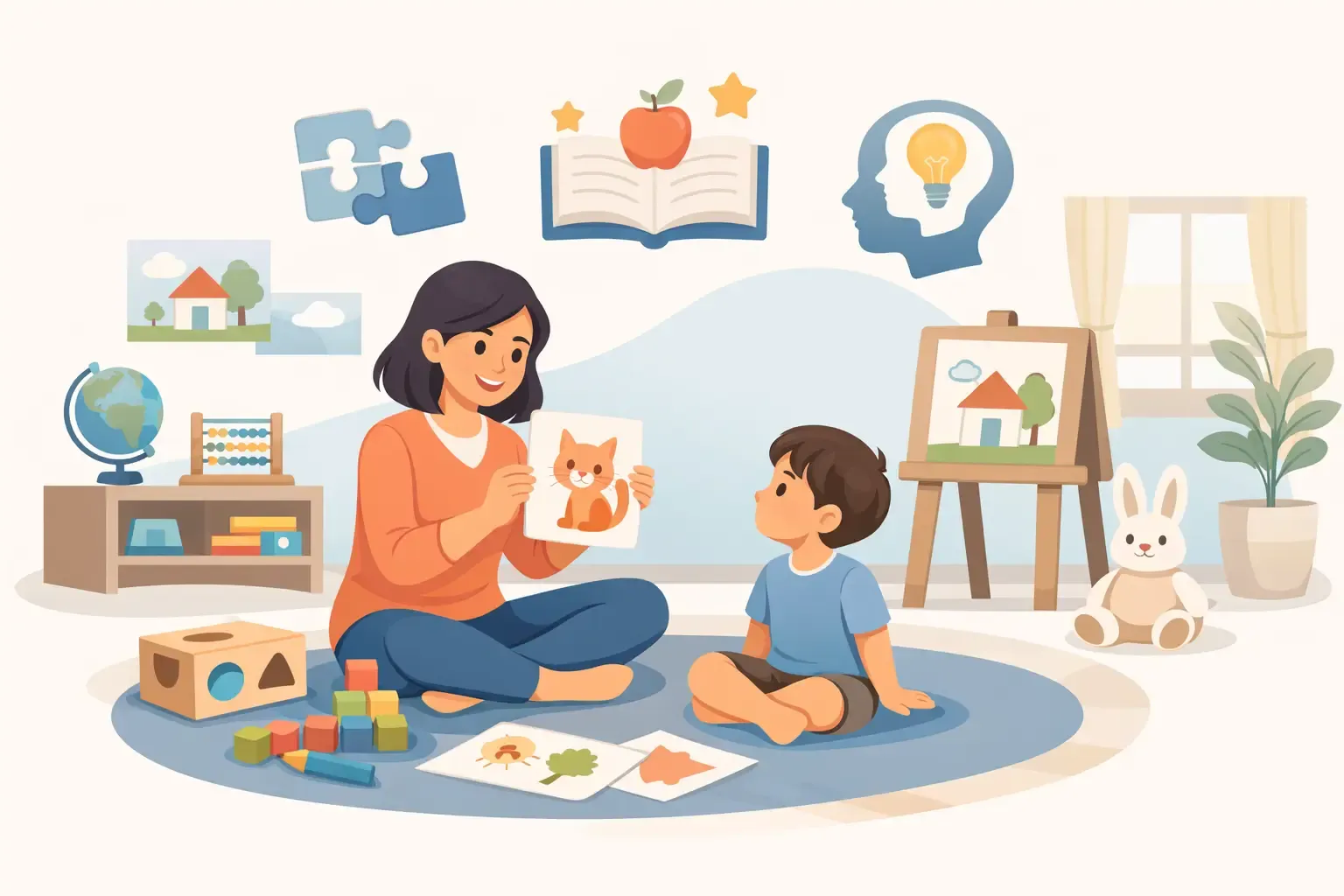
How to Prepare for Preschool Readiness at Home
For Muslim families, readiness can also include something deeper: helping children connect kindness, gratitude, self-control, and respect to the values they see at home. A child who learns that Allah loves gentle words, helpful hands, and sincere effort carries a meaningful sense of direction into the classroom.
What Preschool Readiness Actually Means
Preschool readiness is not a test a young child has to pass. Children develop at different speeds, and a child who is quiet at first may still be fully capable of thriving once they feel safe. Readiness is best understood as a collection of developing skills across emotional, social, physical, language, and early learning areas.
A preschool-ready child is beginning to separate from a trusted adult with support, follow one or two simple directions, and participate in a predictable routine. They can make basic needs known, such as asking for water or help in the bathroom. They are also building the ability to wait briefly, take turns, use materials safely, and recover after a small disappointment.
Academic exposure has a place, but it should not become the whole goal. Recognizing their name, enjoying books, noticing colors and shapes, counting objects, and listening to stories are helpful early experiences. Yet confidence, communication, and the ability to engage with others often make a bigger difference during the first weeks of school.
How to Prepare for Preschool Readiness Through Routines
Young children feel more confident when they can predict what comes next. A calm, repeatable home rhythm gives them practice with the transitions they will meet at preschool: getting dressed, eating, cleaning up, listening, playing, resting, and leaving for the day.
Start with one or two routines rather than changing the entire household schedule at once. For example, invite your child to place their shoes in the same spot each day, wash hands before meals, and help put toys away before moving to another activity. Use clear, warm language: “First we clean up, then we choose a book.” This builds understanding without turning every moment into a command.
If your child will be attending a morning program, gradually practice the wake-up and bedtime schedule a few weeks beforehand. A rested child is better able to manage new sounds, faces, and expectations. Keep mornings simple enough that there is room for connection, not constant rushing.
Faith can make routines feel purposeful. Begin meals with Bismillah, encourage a short dua before sleep, and let your child see that caring for their belongings is part of being responsible. These repeated moments help Islamic values become lived habits rather than words reserved for special occasions.
Practice Small Separations With Care
Separation anxiety is common, even for children who are excited about school. It is not a sign that a child is unready or that a parent has done something wrong. It shows that the relationship matters.
Practice brief, positive separations with a familiar caregiver when possible. Tell your child where you are going, who will care for them, and when you will return. Avoid slipping away without saying goodbye, as this can make future transitions feel less secure. A simple, consistent goodbye ritual - a hug, a short phrase, and a wave - is often more helpful than a long farewell.
You can also role-play school drop-off using stuffed animals. Let your child be the teacher, parent, and student. Through play, children rehearse feelings they may not yet have the words to explain.
Build Independence Without Pressure
Independence at preschool does not mean doing everything alone. It means a child is learning to try, ask for help, and take pride in small responsibilities. Give your child enough time to participate in daily care tasks, even when doing it yourself would be faster.
Encourage them to pull up pants, place arms through sleeves, open easy containers, carry a small bag, and put used tissues in the trash. At meals, let them practice using a spoon, drinking from an open cup when appropriate, and sitting at the table for a gradually increasing amount of time.
Bathroom independence varies widely by age and school expectations. If your child is still learning, focus on the sequence: noticing the need to go, communicating it, managing clothing with help if needed, wiping according to their ability, flushing, and washing hands. Speak positively and avoid shame around accidents. Children learn best when they feel supported.
A useful phrase is, “Try first, then I will help.” It communicates belief in your child while keeping help available. If a task leads to daily frustration, make it easier before asking for more. Choose slip-on shoes before laces, or a loose jacket before a difficult zipper. Readiness grows through successful practice.
Grow Language, Listening, and Social Confidence
The strongest preparation tool is conversation. Talk with your child throughout the day about what you are doing, what you notice, and what might happen next. Instead of asking only questions with one correct answer, try open invitations: “What do you think this bird is doing?” or “How could we help your brother feel better?”
Read aloud every day, even for a few minutes. Point to pictures, pause to let your child add words, and revisit favorite books. Rhymes, nasheeds, simple stories of the prophets, and age-appropriate Islamic character lessons can strengthen listening while nurturing love for faith and language.
Social confidence develops through repeated, low-pressure opportunities to be with other children. A park visit, a playdate, a family gathering, or a community class can all help your child practice greeting others, sharing space, and joining play. They do not need to become outgoing. The goal is simply to learn that other children may have different ideas and that an adult can help when play feels difficult.
Teach a few practical phrases your child can use: “Can I play?” “My turn, please.” “I need help.” “I don’t like that.” These words give children alternatives to grabbing, crying, or withdrawing when they feel overwhelmed.
Let Play Do the Teaching
Worksheets may look like preparation, but active play gives young children more useful practice for preschool. Building blocks develops coordination, planning, and persistence. Playdough strengthens the small hand muscles later used for drawing and writing. Water play introduces pouring, measuring, and cause and effect. Pretend play builds language and empathy.
Offer simple materials and allow your child to lead sometimes. A cardboard box can become a masjid, a market, or a rocket. Leaves can be sorted by size. Socks can be matched by color. When adults stay curious rather than taking over, children learn that their ideas matter.
STEAM learning at this age should feel hands-on and joyful. Ask, “What do you think will happen if we add more blocks?” or “Which objects float?” There is no need to correct every answer immediately. The habit of wondering is more valuable than getting every answer right.
Prepare the Heart, Not Only the Backpack
Before preschool begins, speak about school in an honest and hopeful way. Describe what your child may do there: greet teachers, listen to a story, play outside, make art, eat a snack, and learn with friends. If possible, visit the setting beforehand or look at photos together so the place feels familiar.
Avoid promising that your child will never feel sad. Instead, reassure them that sad feelings can come and go, and that teachers are there to help. Remind them that you will return. This is more trustworthy than trying to remove every worry.
At KinderHive, this kind of preparation is reflected in an approach that sees each child as more than a future student. Children are nurtured as capable learners, caring friends, and young Muslims developing character through play, guidance, and meaningful daily experiences.The most valuable thing you can give your child before preschool is not a folder full of completed activities. It is the steady message that they are loved, that trying is worthwhile, and that new places can become safe places with time. When a child enters school carrying that assurance, they are ready to begin growing.