
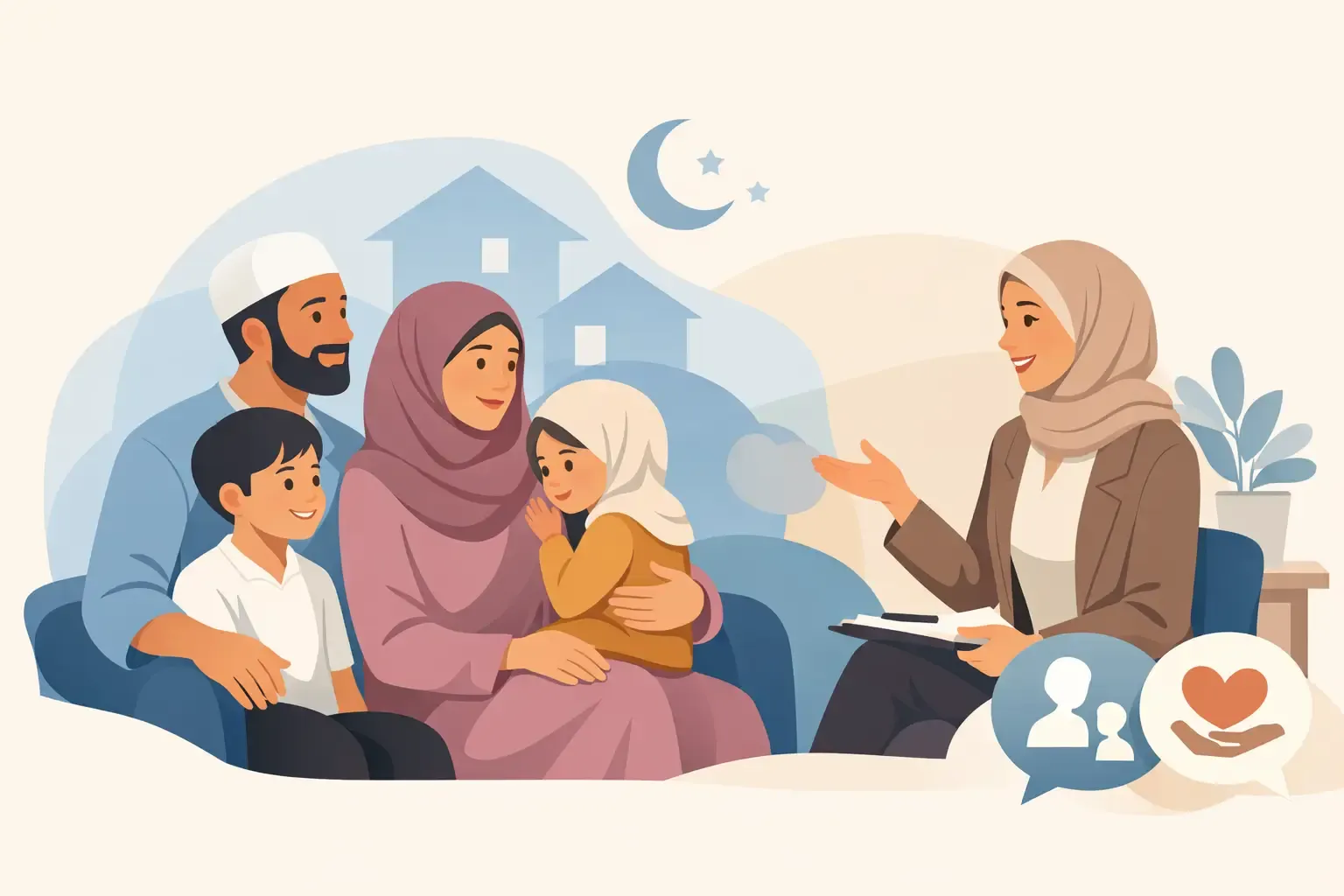
Parenting Support for Muslim Families That Helps
For Muslim parents, early childhood is a meaningful season of formation. Children are learning language, independence, emotional regulation, and curiosity. They are also beginning to absorb what faith looks and feels like at home: the sound of kind words, the comfort of dua, the habit of gratitude, and the safety of being loved through difficult feelings.
Parenting Support for Muslim Families Starts at Home
Young children do not need long lectures to begin building an Islamic identity. They learn through repetition, relationships, and what they observe. A child who hears Bismillah before eating, sees adults apologize after a mistake, and is welcomed into simple prayer routines is receiving a foundation that reaches beyond memorization.
The goal is not to make every household moment into a lesson. Constant correction can make faith feel heavy, especially for a child still learning basic self-control. Instead, parents can connect Islamic values to the situations already happening each day. When a child shares a toy, name generosity. When they wait for a turn, recognize patience. When they spill water and help clean it up, show that responsibility includes making things right.
This approach helps children understand that Islam is not separate from their daily lives. It guides how they speak, play, care for others, and respond when things do not go as planned.
Support is not the same as perfection
Many parents feel pressure to create a peaceful, highly organized home while raising children, working, managing finances, and caring for extended family. A difficult morning or a missed routine does not erase the good that has been built. Children benefit more from repair than from perfection.
If a parent speaks sharply during a stressful moment, a calm apology afterward is powerful. It teaches humility, accountability, and mercy. When adults model returning to Allah after mistakes, children learn that faith gives them a path forward rather than a reason to feel ashamed.
Create Rhythms Children Can Understand
For children ages one through six, predictable rhythms often provide more security than complicated rules. A consistent sequence around waking, meals, play, rest, and bedtime helps children know what comes next. It can also reduce power struggles because the routine, rather than the parent alone, becomes the guide.
Faith can fit naturally into these rhythms. A short morning dua, a familiar nasheed during cleanup, or a bedtime story about a prophet can become anchors in a busy day. Keep expectations age-appropriate. A two-year-old may join a prayer for a few seconds or imitate a movement. A five-year-old may remember a short dua and begin asking why Muslims pray.
What matters is warmth and consistency. If a child is tired, restless, or resistant, forcing a long activity may create frustration for everyone. It is often better to offer a brief, positive connection and try again later. Small, repeated experiences are more likely to become beloved family habits.
Help Children Name Feelings With Compassion
Character formation includes emotional growth. Children cannot learn patience, gentleness, or self-control simply by being told to have them. They need help identifying what they feel, calming their bodies, and practicing a better response.
When a child is angry, parents can acknowledge the feeling while setting a clear boundary: “You are upset because you wanted the red cup. It is okay to feel angry. It is not okay to hit.” This separates the child from the behavior. They are not “bad” for having a big feeling, but they are responsible for learning safer ways to express it.
Islamic language can support this process when it is offered gently. A child might take a breath, say astaghfirullah with a parent, get a drink of water, or sit in a cozy quiet space before trying again. These are not magic fixes. Toddlers and preschoolers still need time and patient adult guidance. Yet over time, they begin to connect inner calm, self-awareness, and remembrance of Allah.
Avoid using religious language only when a child has done something wrong. If “Allah is watching” is always said in anger, it can create fear rather than trust. Let children also hear that Allah is Merciful, that Allah loves kindness, and that they can always make a better choice after a mistake.
Build a Circle of Support, Not Just a Schedule
Parenting can feel lonely when every decision seems to carry spiritual and developmental weight. A strong support circle gives families room to ask questions without judgment. This may include a spouse, grandparents, trusted friends, an imam or community leader, and educators who understand both child development and Islamic values.
Not every family will have the same support system. Some parents live far from relatives. Others may have loving family members whose advice differs from their own parenting approach. In these cases, it helps to be clear and respectful about the values that guide your home. You can appreciate a grandparent’s care while still asking them not to use harsh labels, shame, or threats with your child.
Parents also need support that is practical. A friend who brings a meal after a new baby arrives, a relative who watches a toddler during an appointment, or another parent who listens after a hard week can make a real difference. Accepting help is not a failure of independence. It is part of the care that families are meant to offer one another.
Choose Early Learning Environments With Care
For many families, a playschool, preschool, or kindergarten becomes an important extension of home. The right setting should do more than provide supervision. It should understand how young children learn through movement, play, language, exploration, and secure relationships.
A faith-aligned program can reinforce the values parents are already nurturing. Look for educators who speak to children with respect, use positive guidance, and make Islamic learning developmentally appropriate. Young children need opportunities to ask questions, create, investigate, and practice social skills. Strong early education can bring together literacy, early math, STEAM experiences, and play-based learning with gratitude, compassion, adab, and love for Allah.
It also helps when communication between home and school is consistent. Parents should know what children are learning, how teachers respond to challenging behavior, and how family routines can connect with classroom experiences. KinderHive is built around this kind of holistic partnership, recognizing that a child’s growth is strengthened when parents and educators share a caring, values-centered approach.
Know When to Ask for More Help
Every child develops at a different pace, and occasional tantrums, picky eating, separation anxiety, or sleep changes are common in the early years. Still, parents should trust their observations. If a child consistently struggles to communicate, seems unable to engage with others, loses skills they previously had, has intense reactions that disrupt daily life, or shows significant changes in mood or behavior, it is wise to seek guidance.
Start with the child’s pediatrician or a qualified early childhood professional. Asking for an assessment does not mean a parent has failed, and it does not reduce the role of faith. It gives families clearer information and access to support that can help a child thrive. The most helpful care respects both a child’s developmental needs and the family’s beliefs.
Let Faith Feel Like Belonging
The early years pass quickly, but children carry the emotional tone of home with them. They may not remember every story read before bed or every phrase taught at the table. They will remember whether they felt safe to ask questions, whether mistakes could be repaired, and whether faith was connected to love, comfort, and belonging.
Begin with one small practice this week: a shared dua in the car, a calmer response after a spill, or five minutes of uninterrupted play on the floor. These quiet choices are not small to a young child. They are how trust grows, how character takes root, and how a Muslim family creates a home that helps every child flourish.