
Why Do Toddlers Need Routines Every Day?
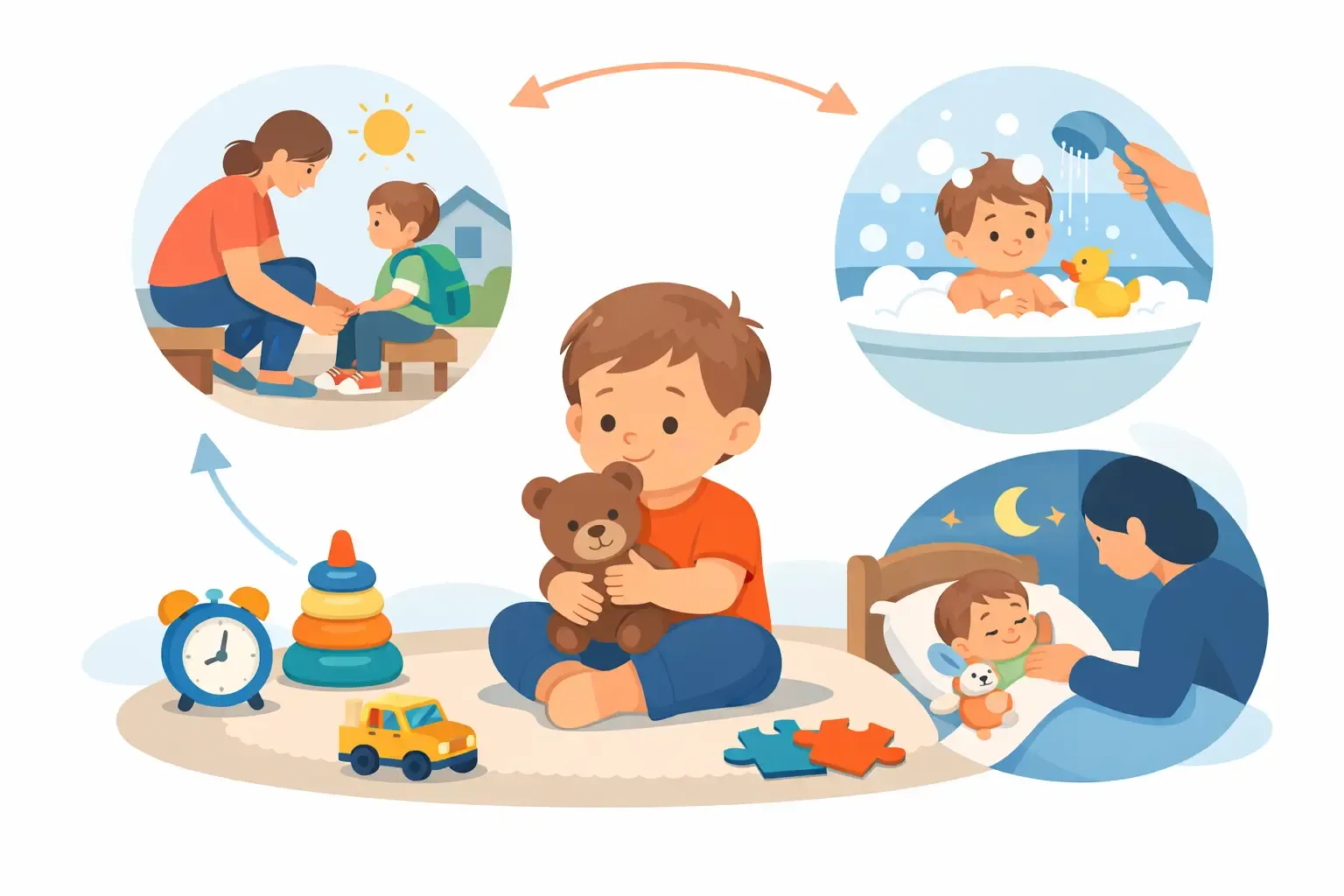
For toddlers, routine is not about making childhood strict or overly scheduled. It is a gentle rhythm of predictable moments: waking up, eating, playing, resting, washing up, praying with family, reading, and going to sleep. These repeated moments give children security while creating meaningful opportunities to grow in independence, character, and faith.
Why Do Toddlers Need Routines for Emotional Security?
Toddlers are learning about a very big world with limited language, limited self-control, and powerful feelings. They may not yet understand why they have to leave the park, wait for food, or stop playing to take a bath. When these transitions seem to appear without warning, frustration is a natural response.
A routine helps a child anticipate what is coming. When breakfast is usually followed by getting dressed, or when a bath is followed by pajamas and a bedtime story, the day feels less surprising. That predictability can reduce anxiety and make transitions easier over time.
This does not mean a toddler will never protest. Even children who know the routine may resist leaving a favorite activity or going to bed. The difference is that a familiar rhythm gives parents a calm, consistent response: “First we clean up, then we have our story.” A child may still need comfort, but they are not being asked to navigate a completely unfamiliar situation.
Consistency also builds trust. When adults follow through with warm and clear expectations, children learn that their caregivers are dependable. That sense of safety becomes a foundation for confident exploration, both at home and in a learning environment.
Routines Support Growing Independence
Toddlers want to do more for themselves, even when their skills are still developing. A predictable sequence gives them manageable ways to participate. They can place their cup in the sink after breakfast, choose between two suitable shirts, help put toys into a basket, or carry a book to the reading corner before rest time.
These small responsibilities may take longer than doing everything for them. That is the trade-off. Yet allowing time for a toddler to try builds capability and pride. Instead of hearing only “Let Mommy do it,” they begin to hear, “You can try. I am here to help.”
Routine also reduces the number of instructions a child must process at once. Rather than saying, “Stop playing, find your shoes, get your bag, and come to the door,” parents can use familiar steps. A simple visual chart with pictures can help some children understand the order of the morning or bedtime routine before they can read.
Independence at this age is not about expecting perfection. It is about inviting participation. A toddler who puts one toy away, washes their hands with help, or joins in putting their prayer mat in place is practicing responsibility in a developmentally appropriate way.
A Daily Rhythm Makes Learning Easier
Young children learn through repetition. Repeated songs, stories, conversations, and play experiences strengthen memory and language. Repeated routines do something similar: they create dependable spaces for learning throughout the day.
Mealtimes can build language and manners. Outdoor play supports movement, curiosity, and problem-solving. Cleanup time teaches care for shared spaces. A bedtime story strengthens connection and listening skills. None of these moments needs to feel like a formal lesson. For a toddler, meaningful learning often happens through ordinary family life.
A consistent rhythm can also support healthy physical needs. Regular meals and snacks help children recognize hunger and fullness. A calm rest period protects their energy. A predictable bedtime routine can signal that the body is preparing to sleep. Every child’s sleep needs are different, but most toddlers benefit when evenings are not rushed, stimulating, or unpredictable.
At an early learning center, routines allow children to settle into the group. They learn that arrival is followed by greeting friends, play is followed by cleanup, and group time is followed by another engaging activity. This structure leaves more emotional energy for exploration, creativity, and relationships.
Routines Can Nurture Islamic Values Naturally
For Muslim families, daily rhythm can make Islamic values part of a child’s lived experience rather than a separate subject. Toddlers learn first by seeing, joining, and repeating. They notice the words their parents say, the care shown to others, and the pauses that shape a family’s day.
A simple routine might include saying bismillah before eating, giving thanks after a meal, making dua before sleep, or helping lay out a small prayer mat beside a parent. These moments should be gentle invitations, not pressure. At this stage, the goal is connection: helping a child associate faith with warmth, belonging, gratitude, and loving guidance.
Routine also gives character formation a practical home. A child learns patience by waiting briefly for a turn, compassion by helping a sibling, cleanliness through washing hands, and respect through greeting family members. The words matter, but the repeated practice matters too.
This is one reason a values-centered early education setting can be so meaningful. KinderHive’s approach brings together play-based development, modern learning experiences, and Islamic nurturing so children can encounter positive habits in a consistent, age-appropriate environment.
Structure Is Helpful, but Rigidity Is Not
A routine should serve the child and the family, not become a source of stress. There will be days with travel, illness, family visits, appointments, disrupted sleep, or a toddler who simply needs extra closeness. Flexibility is part of responsive parenting.
Think of routine as an anchor rather than a strict timetable. The exact clock time may change, but the order of key events can remain familiar. If nap time happens later during a family outing, a child may still benefit from the same wind-down steps: a quiet voice, a favorite comfort item, and a short story or song.
Some toddlers need more predictability than others. A child who is sensitive to changes, new environments, or transitions may benefit from extra preparation. Giving a simple warning such as “Five more minutes, then we clean up” can make a real difference. Other children may be comfortable with more variety but still thrive when meals, rest, and bedtime have a recognizable pattern.
Parents do not need to fill every hour with activities. In fact, toddlers need unhurried play and moments of boredom too. A routine should leave room for discovery: building towers, looking at bugs outside, pretending with dolls, asking unexpected questions, and resting close to a trusted adult.
How to Create a Toddler Routine That Lasts
Start with the parts of the day that already happen most often. Most families find it easiest to establish anchors around waking, meals, rest, bedtime, and leaving the house. Build one or two simple habits around each anchor instead of trying to redesign the entire day at once.
For example, a bedtime rhythm could be bath, pajamas, a short dua, one book, cuddles, and lights out. Keep the order consistent enough that your child recognizes it. If a routine is too long or depends on perfect timing, it may be difficult to sustain when life gets busy.
Use clear, positive language. “It is time to put the blocks in the basket” is easier for a toddler to understand than repeated warnings about what they are doing wrong. Offering limited choices can preserve cooperation: “Would you like the blue cup or the green cup?” The adult remains in charge of the routine, while the child has a small, safe sense of control.
Most importantly, give new routines time. A toddler may need many repetitions before a pattern feels familiar. Calm consistency works better than expecting instant cooperation. When a day goes off track, return to the next familiar moment with gentleness.
A well-loved routine does not make a child’s world smaller. It gives them a safe place from which to grow, try, worship, play, and meet each new day with greater confidence.