
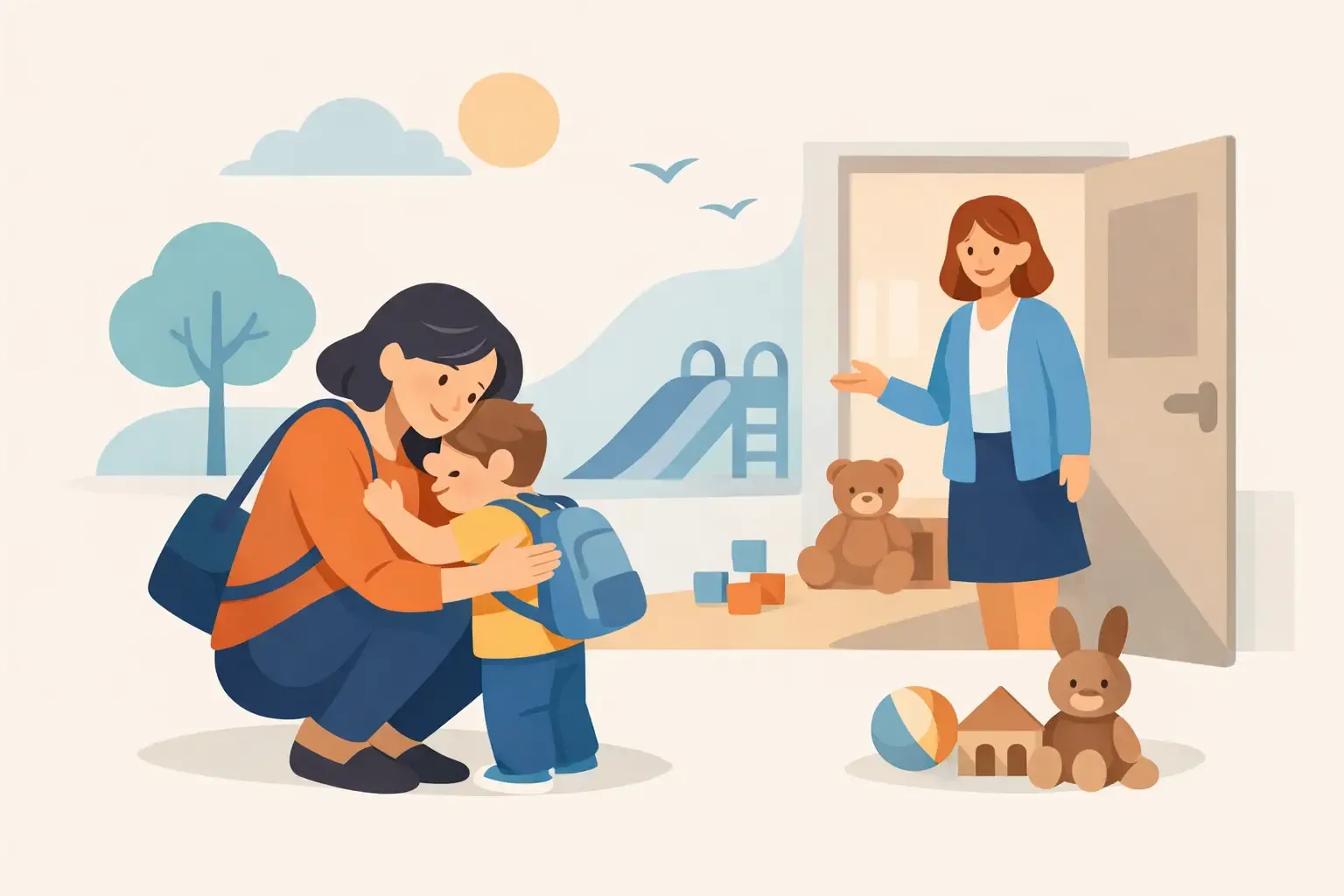
How to Manage Preschool Separation Anxiety
For many preschoolers, separation anxiety is a normal part of growing independence. A child can be curious, capable, and excited to learn, yet still struggle when it is time to say goodbye. With calm preparation, consistent routines, and a nurturing school partnership, children can gradually build the confidence to enter their classroom with greater security.
Why Preschool Separation Anxiety Happens
Preschool is full of new experiences. There may be new adults, unfamiliar children, different sounds, a new bathroom routine, and expectations that are not part of home life. Even a warm, well-prepared classroom can feel overwhelming at first.
Young children also do not experience time in the same way adults do. “I will be back after lunch” may be reassuring to a parent, but it can still feel abstract to a child. What they know is that their trusted caregiver is leaving, and they are being asked to stay somewhere unfamiliar.
Separation anxiety may become stronger after a family holiday, illness, a move, the arrival of a sibling, or any change in routine. Some children need only a few days to adjust. Others need several weeks of predictable support. Temperament matters too. A cautious child may observe quietly before feeling ready to join, while a more social child may still become tearful at drop-off because goodbyes are hard.
This does not mean preschool is the wrong choice. Often, it means your child needs a steady bridge between home and school.
Prepare Before the First Drop-Off
A confident start is usually built before the first full school day. Talk about preschool in simple, positive language. Describe what will happen: you will arrive, hang up a bag, greet the teacher, choose an activity, and then Mommy, Daddy, or another caregiver will return after school.
Avoid making promises you cannot keep, such as “I will stay all day” or “You will not cry.” Instead, offer honest reassurance: “You may miss me, and your teacher will help you. I will always come back after school.” This teaches children that difficult feelings can be handled safely.
If possible, visit the school before the first day. Let your child see the classroom, meet a teacher, and notice familiar landmarks such as the entrance, play area, or cubby. At home, you can read books about starting school, practice putting on shoes and packing a small bag, or role-play a brief drop-off using toys.
A small comfort item can help some children, depending on school guidelines. It might be a family photo tucked into a bag, a small handkerchief, or a familiar item that stays in the backpack. The goal is not to make your child dependent on an object. It is to give them a gentle reminder that home and school are connected.
Create a Goodbye Routine Your Child Can Trust
The most helpful drop-off routine is brief, loving, and predictable. When adults hesitate, return for repeated hugs, or appear unsure, children may sense that there is something to fear. A clear goodbye communicates safety.
Choose a simple routine that you can repeat each day. For example, you might walk your child to the door, offer one hug, say a familiar phrase, and place them in the care of their teacher. A parent might say, “Bismillah, have a joyful day. Your teacher will take care of you, and I will see you after school.”
Keep the words warm but avoid lengthy negotiations. If your child asks you not to leave, acknowledge the feeling without changing the plan: “You want me to stay. It is hard to say goodbye. I will come back after school.” Then follow through calmly.
For many children, a goodbye that lasts two minutes is kinder than one that stretches into twenty. Prolonged departures can unintentionally teach a child that crying may delay the separation. This is not manipulation. It is a young child trying to regain closeness in the only way they know.
Help Your Child Feel Safe Through Faith and Familiarity
For Muslim families, faith can offer a meaningful source of comfort during transitions. Keep spiritual language gentle and age-appropriate. You might begin the morning with Bismillah, make a short dua together, or remind your child that Allah is with us wherever we are.
The purpose is not to tell a child they should never feel scared. Fear, sadness, and uncertainty are human feelings. Instead, faith-centered routines can help children understand that they are cared for by their family, their teachers, and Allah.
At home, create consistent rhythms around school days. Wake up at a similar time, offer a familiar breakfast, and allow enough time to leave without rushing. A rushed morning can make a worried child feel even less secure. If one parent usually handles drop-off, try to keep that arrangement stable during the adjustment period when possible.
After school, reconnect before asking many questions. Some children need a snack, a cuddle, or quiet play before they can talk about their day. You might say, “I am happy to see you. What was one thing you liked today?” If your child cannot answer, that is okay. Let the conversation happen naturally.
Partner With Teachers Instead of Guessing
Teachers see what happens after the classroom door closes. Many children who cry at drop-off settle within a few minutes once they are engaged in a familiar activity, greeted by a trusted educator, or invited to play alongside peers.
Share useful information with your child’s teacher. Let them know what comforts your child, what words you use at home, whether there have been recent changes in the family, and which activities tend to capture their interest. This helps the teacher welcome your child with purpose rather than simply trying to distract them.
Ask for a realistic update plan. During the first few days, a brief message from the school may reassure parents that their child has settled. However, constant checking can increase parental anxiety and make it harder to trust the process. It is usually best to agree on when the school will contact you, especially if your child remains highly distressed beyond the expected adjustment period.
A nurturing preschool environment supports emotional development through more than comforting words. Consistent teachers, clear daily routines, play-based learning, gentle guidance, and opportunities for children to make choices all help build a sense of belonging. At KinderHive, this kind of care is strengthened by an approach that supports both developmental growth and Islamic character formation.
What to Avoid When Separation Is Hard
Parents naturally want to remove their child’s discomfort. Yet a few well-intended responses can make the adjustment take longer. Try not to sneak away without saying goodbye. Although it may prevent tears in the moment, it can make a child more anxious because they do not know when a parent might disappear.
It is also helpful to avoid bribing, threatening, or shaming. Statements such as “Big kids do not cry” can make a child feel embarrassed about a normal emotion. Instead, name the feeling and express confidence: “You are sad to say goodbye. You can be sad, and you can still go in with your teacher.”
Be careful about changing plans too quickly. If a child cries one morning, withdrawing them from school that day may bring short-term relief but can make the next separation feel bigger. There are exceptions, of course. If a child is sick, exhausted, or facing a serious concern at school, their needs should be considered thoughtfully. But for ordinary adjustment tears, consistency is often the most reassuring response.
When to Seek Extra Support
Some distress is expected, especially during the first weeks of preschool. It may be time to seek additional guidance if anxiety does not improve over several weeks, becomes more intense, or affects your child’s sleep, appetite, play, or behavior at home.
Speak first with your child’s teacher or school leader. Together, you may be able to adjust the arrival routine, create a transition activity, or develop a gradual plan that supports your child without avoiding school altogether. If anxiety is severe or continues across different settings, consult your child’s pediatrician or a qualified child mental health professional.
As your child learns that every goodbye is followed by a reunion, they are building more than school readiness. They are learning trust, resilience, and the quiet confidence to take their next small step into the world - knowing that home remains a safe place to return to.