
What an Islamic Kindergarten Program Should Build
For Muslim families, kindergarten is not simply a bridge to elementary school. It is a formative season when children begin building confidence, language, friendships, independence, and a sense of belonging. The right program makes room for all of this while nurturing a loving relationship with Allah.
What Is an Islamic Kindergarten Program?
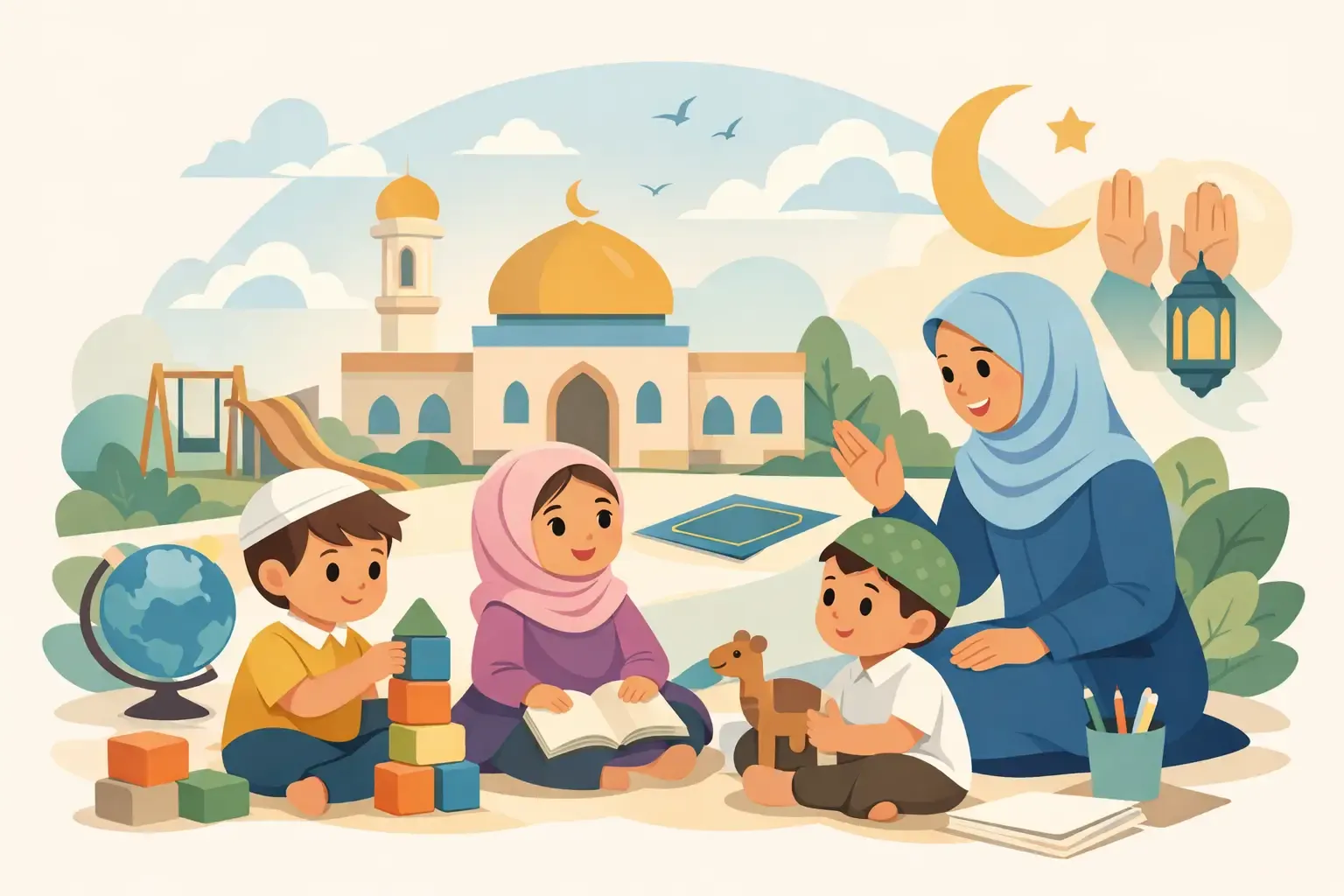
An Islamic kindergarten program is an early learning experience for young children, commonly ages four to six, that combines developmentally appropriate academics with Islamic knowledge, character formation, and daily values. Its purpose is not to add religious lessons to an otherwise separate school day. Faith should be part of the child’s lived experience in the classroom.
That may look like beginning the day with salam, practicing gratitude, learning short surahs and duas, and talking about kindness as an act loved by Allah. It can also appear in the way teachers guide conflict, celebrate effort, care for classroom materials, and help children notice the beauty of creation.
At the same time, a quality program prepares children for the skills they will need in school. They build early literacy, number sense, communication, fine motor control, problem-solving, and the ability to participate in a group. Islamic identity and academic readiness do not compete. When approached with care, they strengthen one another.
Faith Should Feel Warm, Relevant, and Age-Appropriate
Young children learn through repetition, modeling, movement, play, and relationships. They are not ready for long lectures or pressure to perform religious knowledge beyond their developmental stage. They are ready to experience Islam as a source of love, safety, wonder, and good character.
A nurturing classroom introduces concepts in language children can understand. Rather than teaching gratitude as an abstract idea, a teacher may invite children to name blessings before snack time. Rather than treating honesty as a rule on a wall, the teacher can praise a child who admits a mistake and gently help them make it right.
Stories are especially powerful at this age. Prophetic stories, examples of compassion, and lessons about caring for neighbors can help children understand values through memorable characters and situations. Nasheeds, hands-on activities, role play, and simple routines can make these lessons enjoyable without turning faith into a checklist.
The balance matters. A program should have enough structure to build consistency, but enough gentleness for children to ask questions, make mistakes, and grow at their own pace. Every child develops differently, especially in speech, confidence, self-regulation, and social comfort.
School Readiness Means More Than Worksheets
Parents naturally want to know whether kindergarten will prepare their child for the next academic step. It should. Yet school readiness is broader than recognizing letters, writing a name, or counting to 20.
A child who is ready to learn can listen to directions, express a need, take turns, recover after disappointment, and try again when an activity feels difficult. These social and emotional skills are often what allow academic learning to take root.
A strong Islamic kindergarten program develops foundational literacy and numeracy through meaningful experiences. Children may explore letter sounds through stories and games, count objects during a building activity, compare sizes while cooking, or practice writing through drawing and tracing. Play is not a break from learning. For young children, it is often the most natural way learning happens.
Modern approaches such as STEAM can fit beautifully within a faith-centered setting. A simple science activity about plants can become a conversation about observing Allah’s creation. Building a bridge with blocks can develop planning, collaboration, spatial awareness, and perseverance. Technology, when used purposefully and in moderation, can support creativity and exploration rather than replace human interaction.
The goal is not to rush children into formal academics before they are ready. It is to give them a joyful foundation that makes them curious, capable, and comfortable with learning.
The Classroom Environment Teaches Every Day
Children notice what adults repeat, permit, and celebrate. This means the environment of an Islamic kindergarten matters as much as the written curriculum.
A calm, organized classroom helps children feel secure. Clear routines teach predictability. Child-sized materials invite independence. Inclusive displays and books help children see their family values represented with respect. Spaces for reading, building, art, sensory play, and quiet reflection recognize that children learn in different ways.
Teachers also set the emotional tone. They should be warm and observant, with an understanding of early childhood development as well as Islamic values. When a child struggles to separate from a parent, has a disagreement with a friend, or becomes frustrated by a task, the teacher’s response becomes a lesson in mercy, patience, and dignity.
Safety must be practical, not assumed. Families should look for clear arrival and dismissal procedures, clean learning spaces, appropriate supervision, positive behavior guidance, and open communication about a child’s needs. Trust grows when parents know how the program protects both children’s physical well-being and emotional security.
Character Is Built Through Daily Practice
Good character is rarely formed by a single lesson. It grows through hundreds of ordinary interactions. Children learn adab when they greet others respectfully, wait for a turn, care for shared toys, and speak gently even when they are upset.
Programs can make these habits visible through simple classroom routines. Children may help prepare the learning space, serve a friend during snack time, return materials after an activity, or work together to solve a problem. These responsibilities give children a real role in their community.
Teachers should avoid expecting perfection. Kindergarteners are still learning to manage big emotions and impulses. A child may know that sharing is kind and still struggle to share a favorite toy. The most effective guidance is firm, calm, and restorative: name what happened, help the child understand its impact, and guide them toward a better choice.
This approach reflects a meaningful truth for families: character is not only about obedience. It is about helping children develop empathy, accountability, courage, and self-control over time.
Parents and Teachers Need a Shared Partnership
A child benefits most when home and school communicate with one another. Parents do not need to recreate the classroom at home, but they should know what their child is learning and how to extend it naturally.
If the class is practicing a dua, a parent can repeat it during the same daily moment at home. If children are learning about generosity, families can invite them to help choose food for a neighbor or donate a gently used book. These small connections make learning feel consistent rather than compartmentalized.
A good program also respects the knowledge parents have about their own child. Teachers may see how a child participates in a group, while parents understand the child’s routines, sensitivities, interests, and family context. Regular updates and respectful conversations make it easier to support growth early.
For families seeking a broader learning ecosystem, KinderHive reflects this partnership through early education experiences supported by parent-facing resources, educational content, and a values-centered approach to child development.
Questions to Ask When Choosing a Program
Before enrolling, ask how Islamic values appear in the daily routine, not only during a scheduled religious lesson. Ask how teachers support children who are shy, highly active, new to group settings, or still developing language skills. It is also helpful to ask how the program approaches play, early reading, behavior guidance, outdoor time, and parent communication.
Observe the classroom if possible. Are children engaged? Do teachers speak to them with patience and respect? Is there a balance of active play, focused learning, creativity, and rest? A polished brochure can explain a program’s intentions, but the classroom atmosphere shows how those intentions are practiced.
The best choice may depend on your child’s temperament, your family schedule, and the kind of community you hope to build around your child. Look for a setting where faith is lived with warmth, learning is purposeful, and children are known as individuals.
Kindergarten is a brief chapter, but its effect can be lasting. When children are given space to ask, play, pray, create, and belong, they begin school with more than early academic skills. They carry a growing confidence that they are capable learners, caring friends, and valued servants of Allah.