
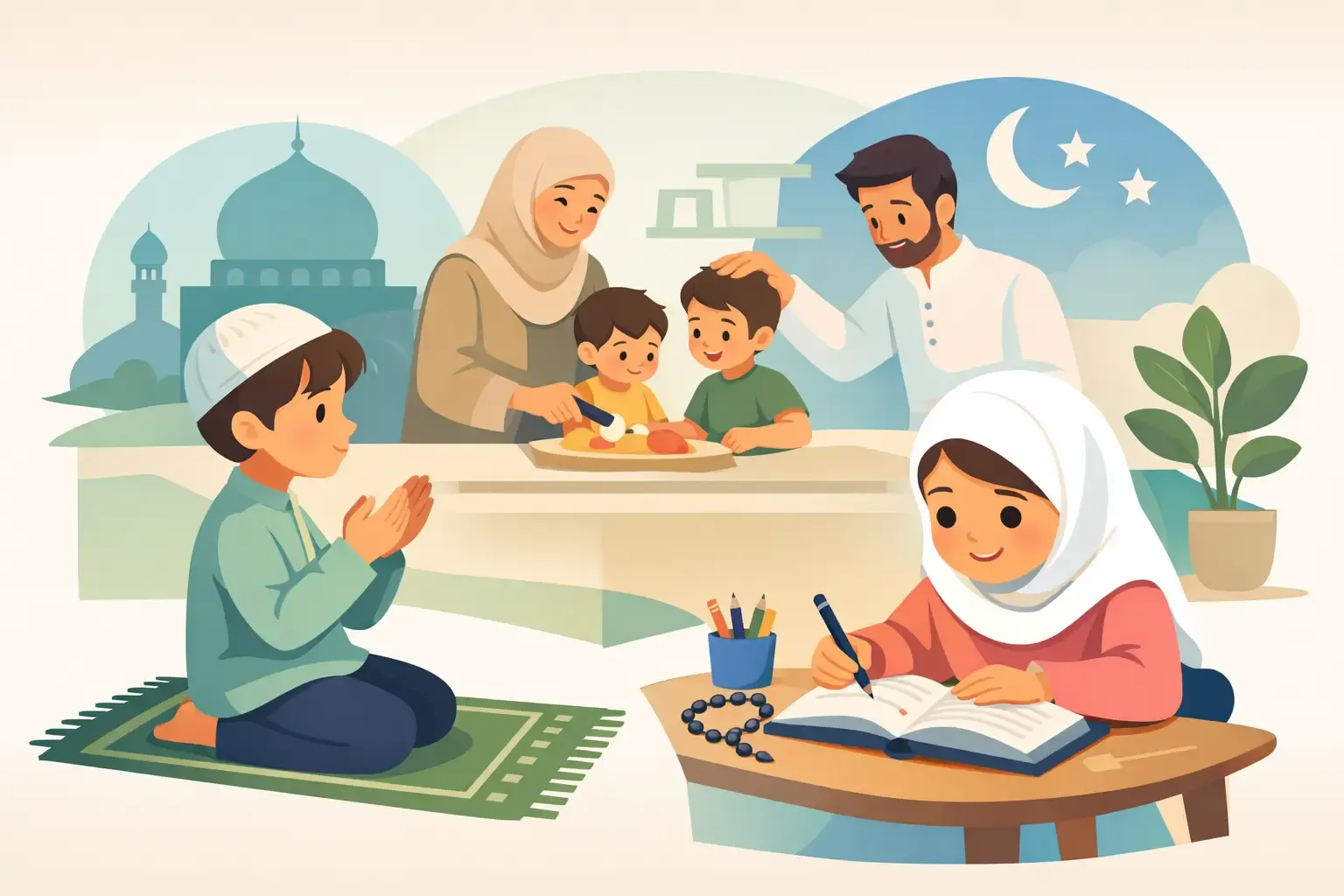
Sunnah Daily Habits for Children at Home
The goal is not to create a long checklist for little ones to complete perfectly. It is to help children feel that Islamic manners belong naturally in their day: at the table, during play, before sleep, and when they meet another person. With patience and consistency, small practices can support a child’s spiritual identity, emotional regulation, and growing sense of responsibility.
Why Small Sunnah Habits Matter in Early Childhood
Children ages 1 to 6 learn through imitation, repetition, movement, and connection. They notice how adults speak when entering a room, what happens before a meal, and how family members respond after making a mistake. When parents practice sunnah with warmth, children begin to associate Islamic values with security and belonging.
A simple habit may look small to an adult, but it carries a larger lesson. Saying Bismillah before eating builds mindfulness. Offering salaam teaches children to acknowledge others with kindness. Thanking Allah after a meal encourages gratitude rather than entitlement. These are daily opportunities to nurture adab, or beautiful character, alongside a child’s developing independence.
There is also a practical benefit. Predictable routines help young children understand what comes next. A short dua before bed can become a comforting signal that the day is ending. Washing hands before meals supports both cleanliness and self-care. Faith-centered routines can work alongside modern early childhood practices, giving children structure without making their day feel overly rigid.
Sunnah Daily Habits for Children to Start Gently
Choose one or two habits first, especially if your child is very young. A toddler may repeat only one word, while a kindergarten-aged child may be ready to understand a short explanation. Progress looks different in every home, and a cheerful attempt is more valuable than a pressured performance.
Begin with salaam
Teach children to say “Assalamu alaikum” when they enter the home, greet family members, or meet familiar friends. At first, they may whisper it, shorten it, or need a parent to say it alongside them. That is part of learning.
Make the greeting feel meaningful. Pause, smile, return the greeting, and acknowledge their effort. When salaam is practiced with eye contact and gentleness, children learn that it is more than a phrase. It is a way of bringing peace into an interaction.
Bring remembrance to mealtimes
Before food or a drink, invite your child to say Bismillah. Keep the reminder calm and brief: “Let’s begin with Bismillah.” As they grow, teach table manners in manageable steps, such as eating with the right hand and taking only what they can finish.
Avoid turning every meal into a correction session. Young children are still developing coordination, attention, and impulse control. If milk spills or a child forgets, model the habit again without shame. A peaceful family table teaches more than repeated reminders delivered with frustration.
Make cleanliness part of worshipful care
Children are naturally hands-on explorers. They paint, dig, touch, and spill. Daily routines around washing hands, brushing teeth, bathing, and putting away clothing can be connected to the Islamic value of cleanliness.
For preschoolers, a visual routine near the sink can help: wash, dry, and place the towel back. For younger children, sing a short hand-washing rhyme that includes praise for Allah. The aim is not perfection. It is helping them understand that caring for their body and surroundings is a meaningful responsibility.
Practice kindness in real moments
Sunnah-centered character is especially visible when children are disappointed, excited, or upset. Encourage them to use gentle hands, share space, wait briefly for a turn, and speak respectfully. When conflict happens, guide them toward repair: “Your friend felt sad when the block was taken. Let’s return it and try again.”
Parents can connect these moments to the Prophet Muhammad’s teachings about mercy, kindness, and good speech in language a child can understand. Rather than giving a long lecture, offer one clear action they can take now. This respects their developmental stage while building a habit of empathy.
End the day with gratitude and dua
Bedtime is one of the most natural places to build a faith routine. Dim lights, reduce distractions, and keep the sequence familiar. A child might help put away toys, change into pajamas, say a short bedtime dua with a parent, and name one thing they are thankful for.
Some children will enjoy repeating every word. Others may be sleepy, restless, or ready for only a few seconds of connection. It depends on the child and the day. A short, peaceful dua that happens regularly is often more sustainable than a lengthy routine that creates stress for everyone.
Let Children Learn Through Play and Participation
Young children do not need faith learning to feel separate from play. In fact, play can make daily habits easier to remember. A child can practice greeting dolls with salaam, prepare a pretend meal and say Bismillah, or use a toy sink to learn the order of washing hands.
Participation matters too. Invite children to set napkins on the table, place shoes neatly by the door, choose a gratitude prompt at bedtime, or help prepare a small item to share with a neighbor. These tasks give children a role in family life. They learn that Islamic values are lived through helpfulness, care, and consideration for others.
At KinderHive, this same connection between values, play, and age-appropriate learning supports children as they grow in confidence. When faith is experienced through familiar routines and joyful participation, children are more likely to carry it with them beyond the classroom or home.
Model First, Then Invite
The most powerful teacher of daily sunnah is a child’s close adult. Children notice whether parents greet others warmly, say Alhamdulillah after a meal, apologize when they make a mistake, and speak kindly when tired. They may not follow immediately, but they are learning.
Use invitation language rather than commands whenever possible. “Let’s say Bismillah together” often works better than “You forgot again.” “Would you like to help me greet Grandma?” gives a child a sense of agency. Clear boundaries still have a place, particularly around safety and respectful behavior, but the overall atmosphere should be encouraging.
It also helps to keep expectations realistic. A 2-year-old may learn through copying and gestures. A 4-year-old may remember phrases with a cue. A 6-year-old may begin to explain why a habit matters. Comparing siblings or expecting adult-level consistency can make faith practices feel like a test rather than a source of comfort.
When a Routine Does Not Stick
If your child resists a habit, simplify it before abandoning it. Choose a calmer moment, reduce the number of words, or make the practice more visible through a picture card or family cue. A child who refuses a full bedtime routine may still be willing to say one word of gratitude while being tucked in.
Be mindful of the difference between teaching sunnah and insisting on a family preference. Homes may vary in language, schedule, and cultural traditions. What matters is offering children a clear, loving foundation in Islamic manners while leaving room for developmental needs and family circumstances.
A missed dua, a forgotten greeting, or a messy meal is not a failure. Return to the habit with gentleness. Children learn best when they know that love remains steady while they are still learning.
The lasting gift is not a child who recites every phrase on cue. It is a child who gradually recognizes Allah’s presence in everyday life, treats others with mercy, and knows that home is a place where faith is practiced with joy.