
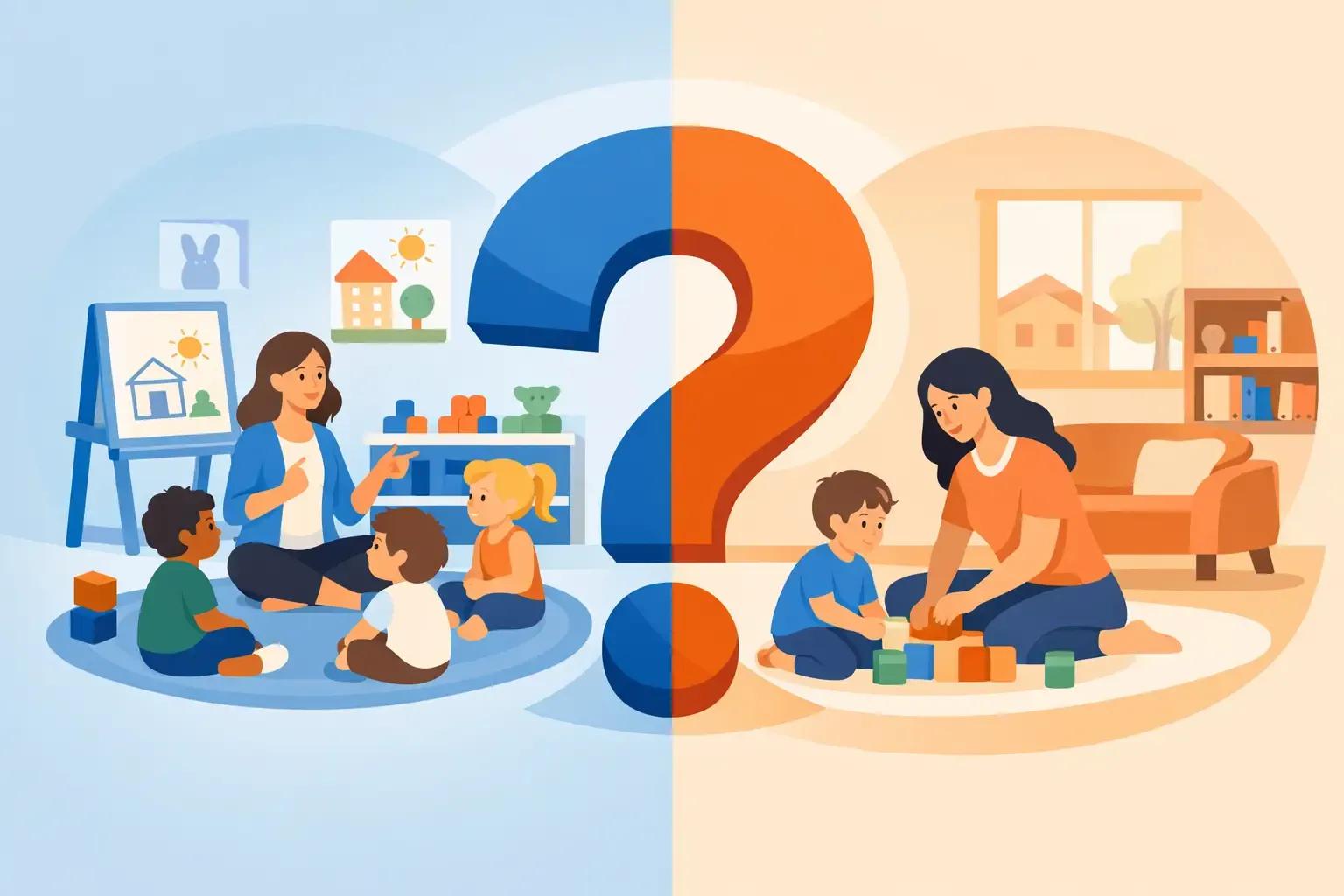
Is Preschool Necessary for Young Children?
The honest answer is that preschool is not necessary in the same way food, safety, loving care, and responsive relationships are necessary. Many children thrive before kindergarten while learning at home with attentive parents, grandparents, or caregivers. Yet a high-quality preschool can offer meaningful developmental benefits that are difficult to recreate consistently in a busy home setting.
The right choice depends on your child, your family’s routine, and the quality of the learning environment available to you. Preschool should never be viewed as a race toward early academics. At its best, it is a gentle bridge between home and the wider world.
Is Preschool Necessary? It Depends on What Your Child Needs
Preschool is not a requirement for every young child, and starting earlier is not automatically better. Children develop at different paces. A confident, talkative four-year-old who has regular opportunities to play with other children may need something different from a child who is shy, easily frustrated by change, or has had little experience in group settings.
What matters most is whether your child has regular opportunities to develop across several areas: language, movement, social skills, emotional regulation, curiosity, independence, and a sense of right and wrong. These experiences can happen at home, in a community group, with extended family, or in a preschool classroom.
Still, quality preschool brings these experiences together with intention. Teachers observe how children learn, plan activities around developmental milestones, and create a rhythm that helps children feel secure. For families seeking an Islamic environment, preschool can also make daily faith practices feel natural and joyful through simple routines such as saying Bismillah before activities, learning short duas, showing kindness, and caring for Allah’s creation.
What Children Gain From a Good Preschool Experience
A good preschool does not simply keep children busy until pickup time. It gives them repeated, meaningful practice in the small skills that shape their confidence over time.
Learning to belong in a group
At home, a child may be the center of loving attention. In a classroom, they discover that other children have ideas, feelings, and needs too. They practice waiting for a turn, sharing materials, joining play respectfully, and repairing a friendship after a disagreement.
These moments can be messy, but they are valuable. A caring teacher helps children name their feelings and choose better responses, rather than expecting perfect behavior. This is where character formation becomes real: patience, empathy, honesty, cooperation, and respect are practiced in everyday situations.
Building independence without losing security
Preschool often gives children manageable responsibilities: putting away a bag, washing hands, choosing an activity, opening a lunch container, or helping clean up. None of these tasks seems large to an adult. To a young child, each one says, “I can do hard things with support.”
Independence does not mean expecting children to act older than they are. It means offering age-appropriate choices and allowing enough time for them to try. A child who can follow a simple routine and ask for help when needed often enters kindergarten feeling calmer and more capable.
Developing language through real interaction
Young children learn language best when it has a purpose. During dramatic play, story time, science exploration, and conversation with peers, they learn new words and practice expressing their thoughts. They also learn to listen.
This matters for early literacy, but it matters just as much for relationships. A child who can say, “Can I play?” “I feel upset,” or “Please help me” has tools that support both learning and emotional well-being.
Growing through play, not pressure
Families sometimes worry that preschool means worksheets, memorization, and pressure to read too soon. Developmentally appropriate preschool should look very different. Play is the work of early childhood.
When children build, sort, pretend, paint, measure, sing, and investigate, they are developing early math, literacy, problem-solving, creativity, and fine-motor skills. A thoughtfully planned STEAM activity may begin with a simple question, such as how to build a bridge strong enough for toy cars. The learning happens through trying, noticing, changing course, and trying again.
In a faith-centered setting, play can also connect children to gratitude and responsibility. Planting seeds, caring for classroom materials, and learning about animals can nurture wonder at the world Allah created.
When Preschool May Be Especially Helpful
There is no checklist that can decide for every family, but preschool may be particularly beneficial when a child needs more regular opportunities for peer interaction, has difficulty separating from familiar caregivers, or will soon enter a more structured school environment.
It can also be helpful when parents want support with routines, communication, toilet independence, emotional regulation, or early learning through play. This is not a sign that a family has failed to provide enough at home. Parenting is not meant to be done alone, and a trusted early childhood program can be a meaningful partner.
For children from homes where English is not the primary language, preschool can provide gentle exposure to classroom language while honoring the child’s home language and identity. The goal should never be to replace a family’s culture or faith. It should be to help the child move confidently between home and school.
When Home May Be the Better Choice for Now
Some children flourish with a parent or caregiver at home, especially when their days include conversation, books, outdoor time, creative play, predictable routines, and contact with other children. A child does not need a formal preschool label to learn.
A family may also decide to wait because their child is still adjusting to a new sibling, a move, a major change in family circumstances, or strong separation anxiety. Waiting can be wise when it comes with a plan to gradually build social experiences and independence in low-pressure ways.
The question is not whether home is “enough.” The more useful question is whether your child’s current routine offers enough chances to grow, connect, explore, and practice being part of a community.
How to Choose a Preschool That Supports the Whole Child
If you decide preschool is right for your family, quality matters more than a flashy curriculum or an early start date. Visit when children are present if possible. Notice whether the classroom feels calm, warm, organized, and active without being chaotic.
Look for teachers who speak to children respectfully, get down to their level, and guide behavior with patience. Young children need clear boundaries, but they also need adults who understand that mistakes are part of learning.
Ask how the program approaches play, discipline, family communication, toilet learning, naps, meals, and school readiness. For Muslim families, ask how Islamic values are woven into the day. A meaningful approach goes beyond occasional celebrations. It helps children connect faith with daily habits of gratitude, adab, compassion, honesty, and care for others.
A strong program should also respect that each child is an individual. Some children enter ready to lead a group activity; others need time to watch before joining. The best teachers do not force every child into the same pace. They nurture progress with consistency and care.
KinderHive’s approach reflects this balance by bringing together play-based learning, early childhood development, Islamic nurturing, and age-appropriate exploration. The aim is not to rush childhood, but to help children build the foundations they will carry into their next stage of learning.A Decision Made With Care, Not Comparison
It is easy to feel pressure when other families begin discussing preschool applications, enrichment classes, and kindergarten readiness. But your child is not behind because their path looks different from someone else’s.
Preschool can be a beautiful and beneficial experience, particularly when it offers loving relationships, purposeful play, thoughtful routines, and values that reinforce what a child learns at home. But it is one part of a child’s early education, not the whole story.
Choose the setting where your child can feel safe enough to explore, supported enough to try, and known well enough to grow into the person Allah created them to be.