
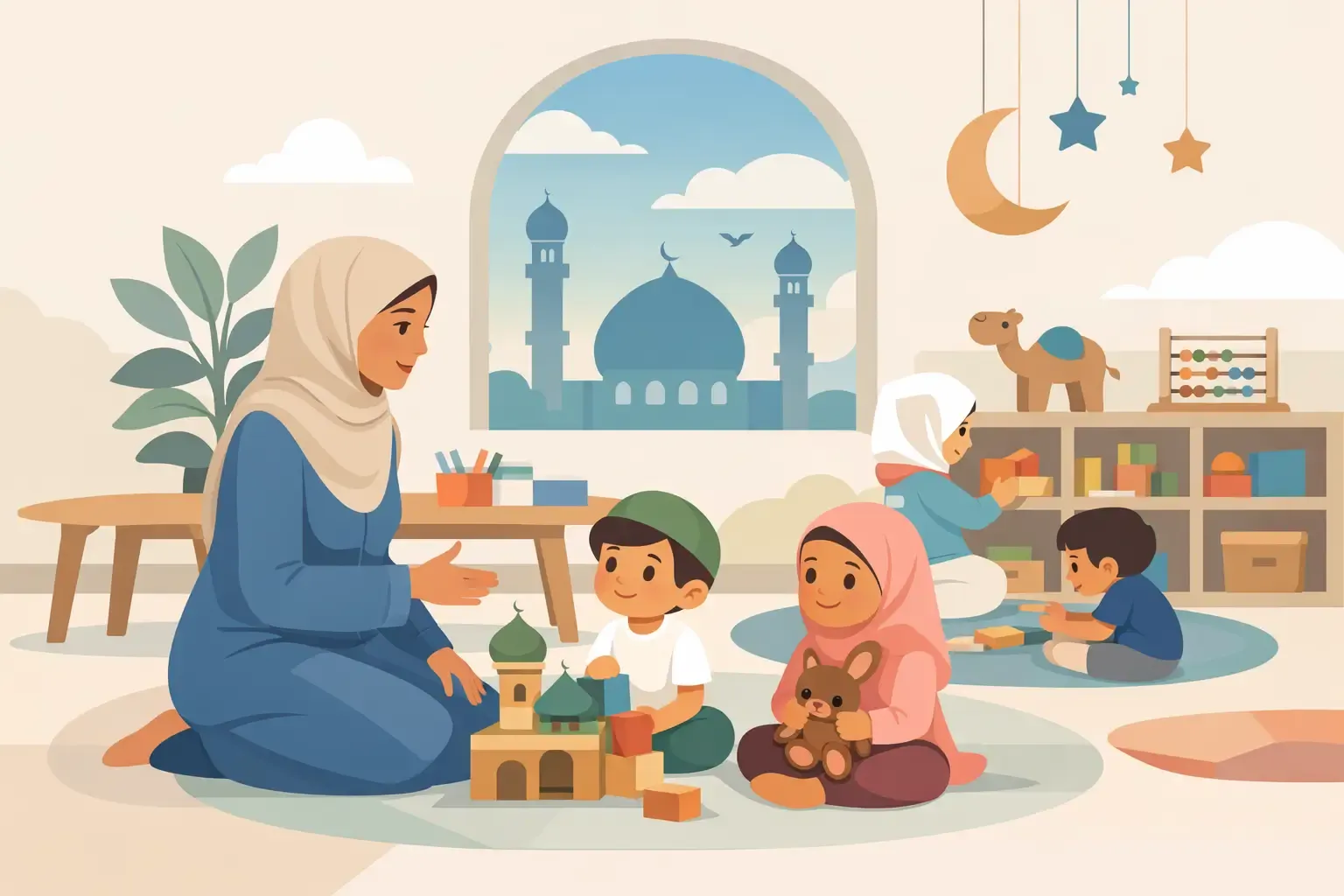
How to Start Islamic Preschool Programs Well
For families, the right program offers reassurance that a child’s Islamic identity and school readiness can grow together. For educators and aspiring school operators, it requires clear systems, trained adults, and a sincere commitment to children’s well-being. The strongest Islamic preschool programs do not treat faith and modern early learning as separate subjects. They allow both to guide the rhythm of every day.
Begin With a Clear Educational Purpose
Before choosing a location or buying materials, define what your preschool will promise children and families. A meaningful mission should explain how Islamic values will be lived, not only displayed. For example, children may practice saying salaam, caring for shared materials, expressing gratitude, waiting patiently, and showing compassion to friends. These are small daily moments, but they create a foundation for akhlaq, or good character.
Your purpose should also recognize the developmental needs of children from ages 1 through 6. Toddlers need secure routines, sensory play, movement, language exposure, and responsive care. Preschoolers need opportunities to ask questions, solve problems, build friendships, develop independence, and prepare for kindergarten. An Islamic setting should strengthen these needs, never replace them with expectations that are too advanced for a young child.
A practical vision might include four connected outcomes: faith formation, character development, early academic readiness, and family partnership. This helps every later decision, from hiring teachers to choosing books, remain consistent with your purpose.
Understand Licensing, Safety, and Local Requirements
In the United States, child care and preschool regulations vary by state, county, and city. Some programs operate under child care licensing rules, while others may qualify for exemptions based on hours, enrollment, religious affiliation, or educational structure. Never assume that being faith-based removes the need to meet safety standards.
Start by identifying the agency that regulates early childhood programs where you plan to operate. Ask about staff-to-child ratios, required background checks, health and immunization policies, building inspections, fire safety, staff qualifications, meal rules, and outdoor play requirements. You may also need business registration, insurance, zoning approval, and a certificate of occupancy before welcoming children.
This stage can feel administrative, but it protects children and builds parent confidence. Families want to know that the adults caring for their child are screened, trained, attentive, and prepared for emergencies. Clear policies for drop-off, authorized pickup, illness, allergies, discipline, toileting, and incident reporting should be established before enrollment begins.
Build an Islamic Curriculum for Young Children
A high-quality curriculum does not ask young children to sit through long lessons or memorize without understanding. It uses repetition, play, stories, songs, conversation, art, movement, and routines to make learning meaningful.
Islamic learning can be woven naturally through the day. A morning circle may include a simple dua and a conversation about one of Allah’s beautiful creations. Story time can introduce prophets, good manners, generosity, or courage through language children understand. During snack, children can practice gratitude and healthy eating. When a child helps a friend, a teacher can name the action: “That was kind. Allah loves kindness.”
At the same time, offer a complete early learning experience. Children need early literacy, math concepts, fine-motor development, gross-motor play, science exploration, creative expression, and social-emotional support. STEAM activities and play-based learning fit especially well in an Islamic preschool because they invite children to observe, wonder, create, and appreciate the world Allah has made.
Keep Faith Teaching Age-Appropriate
Young children learn through concrete experiences. Rather than presenting complex concepts, use simple language, warm repetition, and tangible examples. Teach that Allah made the sky, animals, families, and each child special. Let children hear Arabic phrases in context, while ensuring they also understand the meaning through English.
A balanced program avoids turning faith learning into pressure. The goal is not performance. The goal is for children to associate Islam with love, belonging, beauty, responsibility, and a caring relationship with Allah.
Create Spaces That Invite Safety and Wonder
Your physical environment teaches children before a lesson begins. Classrooms should be clean, calm, accessible, and organized around purposeful play. Low shelves, labeled materials, cozy reading spaces, child-sized furniture, and clearly defined activity areas help children build independence.
Islamic identity can be present in thoughtful ways: children’s dua displays, diverse family images, Arabic letter materials, nature-themed reminders of Allah’s creation, and books that reflect Muslim children’s lives. Avoid filling every wall with visual clutter. Young learners benefit from spaces that feel peaceful and easy to navigate.
Outdoor time matters, too. Running, climbing, digging, balancing, and observing insects support physical development and confidence. If outdoor space is limited, plan regular movement experiences indoors and seek safe ways for children to connect with nature.
Hire Teachers Who Can Nurture and Teach
The heart of an Islamic preschool is its educators. A beautiful curriculum cannot compensate for adults who are unprepared, inconsistent, or disconnected from children. Look for teachers who understand early childhood development and can bring Islamic values into their interactions with patience and sincerity.
Credentials matter, particularly where licensing requires them, but character and coaching matter as well. Teachers should know how to guide behavior without shaming, communicate professionally with parents, observe developmental progress, and support children with different needs and personalities.
Ongoing training is essential. Your team may need support in child protection, positive guidance, infant and toddler care, inclusion, emergency procedures, lesson planning, and family communication. They should also have time to reflect on how Islamic values appear in their own tone, routines, and classroom decisions.
Plan the Business Model Before You Open
A preschool needs a mission and a sustainable operating plan. Create a realistic budget that accounts for rent or mortgage costs, renovations, licensing fees, insurance, payroll, curriculum materials, cleaning supplies, food, technology, marketing, and a reserve for unexpected expenses.
Tuition should reflect your local market, your program hours, staff ratios, and the quality of care you intend to provide. Lower tuition may make access easier for families, but it cannot come at the expense of safe ratios, fair teacher pay, or essential resources. Consider whether your model will offer full-day care, half-day preschool, extended care, summer programs, or parent-child classes. Each option affects staffing, revenue, and family needs.
For entrepreneurs who want a more structured route, a supported education model such as KinderHive can offer curriculum guidance, teacher support, brand systems, and a broader ecosystem of learning resources. Whether you build independently or join an established network, make sure the model gives children and educators the consistency they deserve.
Earn Trust Through Family Partnership
Parents are not simply customers. They are a child’s first and most enduring teachers. From the first inquiry, communicate your program’s values, routines, health policies, educational approach, and expectations with clarity.
Invite families into the learning process through orientation sessions, regular updates, conferences, and simple ideas they can practice at home. A weekly message about a class theme, dua, character habit, or new skill helps parents continue the conversation beyond school. Listen carefully, too. Families may have different cultural traditions, languages, schedules, and hopes for their children.
Trust grows when communication is timely and respectful, especially when a child is struggling with separation, behavior, speech, or social adjustment. Address concerns early, document observations carefully, and focus on solutions rather than labels.
Launch With Consistency, Then Improve With Care
Opening day is not the finish line. In the first months, observe how children settle into routines, how teachers use the curriculum, and where families need more support. Small improvements can have a lasting effect: adjusting arrival procedures, simplifying a classroom schedule, adding visual supports, or giving teachers more planning time.
Ask for parent feedback, but interpret it alongside child observations, staff input, and your educational goals. Not every request will fit your program, and that is okay. Consistency is part of what makes a preschool feel safe.
When a child walks through your door feeling welcomed, protected, and excited to learn, the work becomes deeply meaningful. Start with sincere intention, build with professional care, and let every routine show children that faith, learning, and kindness belong together.